Gold Price Analysis: Rising Oil Prices and Fed Expectations Put Pressure on Bullion
© open source

July 23, 2026 – Spot gold traded near $4,040 per ounce on Thursday after retreating from a recent two-week high.


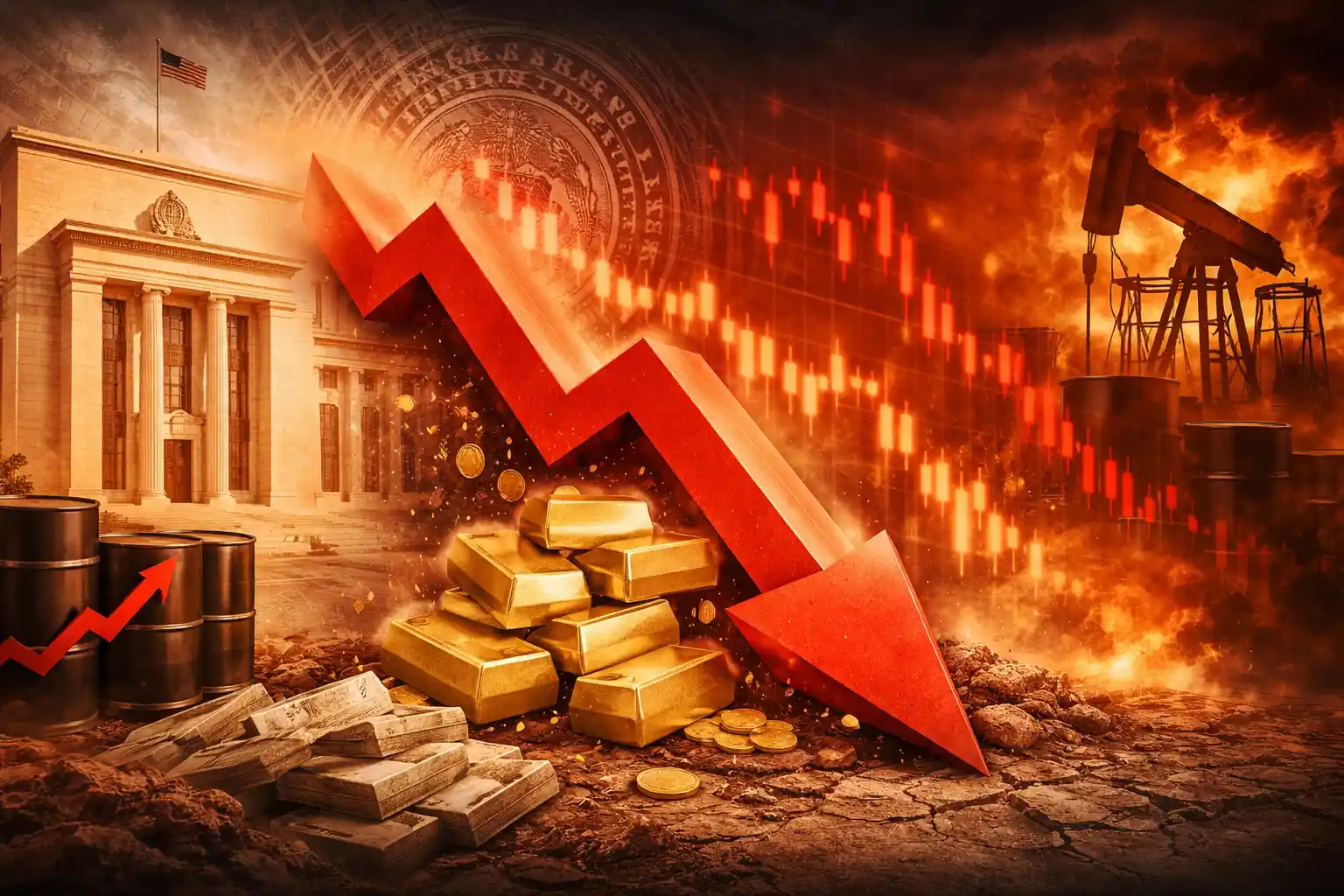
The decline came as higher oil prices fueled inflation concerns, lifting U.S. Treasury yields and strengthening the U.S. dollar.


Investors are now focused on next week's Federal Reserve meeting for additional guidance on interest rate policy.


What Do Technical Indicators Suggest About Gold?

Technical indicators show that gold remains in a period of consolidation after its recent rally. The metal continues to trade above the important psychological support level of $4,000 per ounce, but momentum has weakened as bond yields move higher.


Analysts note that maintaining support above this level will be important if gold is to regain its upward trend.


Although gold has experienced short-term volatility, the longer-term picture remains balanced. Market participants continue to monitor support and resistance levels closely while waiting for additional signals from central bank policy and inflation data.


What's Driving Gold Prices Today?

Gold prices are currently influenced by several competing factors. On one hand, geopolitical tensions continue to increase demand for safe-haven assets.


On the other hand, rising oil prices have strengthened expectations that inflation could remain elevated, increasing the likelihood that the Federal Reserve may keep interest rates higher for longer.


Higher interest rates reduce the appeal of gold because the metal does not generate income. In addition, a stronger U.S. dollar makes gold more expensive for international buyers, limiting additional upside despite continued geopolitical risks.


What's Next for Gold?

Looking ahead, the Federal Reserve's policy decision will likely determine gold's next major move. A more cautious central bank could support another rally in bullion, while signals that interest rates may remain elevated could place additional pressure on prices.


Despite the recent decline, many analysts continue to expect gold to remain well supported over the long term because of central bank purchases, geopolitical uncertainty, and continued demand for safe-haven investments.


However, investors should be prepared for increased short-term volatility until the outlook for interest rates becomes clearer.

Share this article

Read more

Related news

 Gold Prices Climb as Softer Dollar and Fed Expectations Strengthen Safe-Haven Demand

Gold Prices Climb as Softer Dollar and Fed Expectations Strengthen Safe-Haven Demand

July 22, 2026 – Gold prices advanced on Wednesday, reaching their highest level in nearly two weeks as the U.S. dollar weakened and investors reassessed the Federal Reserve's interest rate outlook , traded near $ 4100.Continued geopolitical tensions in the Middle East also reinforced demand for safe-haven assets, allowing the precious metal to extend its recent gains despite ongoing uncertainty across global financial markets.Weaker Dollar Improves Gold's AppealGold received additional support as the U.S. dollar lost momentum, making the precious metal more affordable for buyers using other currencies. Investors also remained focused on the Federal Reserve's next policy decisions, with recent economic data fueling expectations that the central bank could take a more measured approach to monetary policy. Although inflation concerns remain due to elevated energy prices, softer economic indicators have encouraged optimism that interest rate pressures may gradually ease.Global Uncertainty Continues to Support BullionSafe-haven demand remained an important driver of the gold market as investors responded to ongoing geopolitical tensions and uncertainty surrounding the global economy. Concerns over energy markets and inflation continue to influence investment decisions, while gold has maintained its appeal as a defensive asset during periods of heightened market volatility. Analysts believe these factors are likely to keep supporting bullion in the near term.Investors Await Fresh Economic SignalsLooking ahead, traders are expected to closely monitor upcoming U.S. economic reports and comments from Federal Reserve officials for clues about the future direction of interest rates. Continued weakness in the dollar and persistent geopolitical risks could create room for further gains in gold prices. However, stronger-than-expected economic data or a more hawkish tone from policymakers may slow the current rally. Until clearer signals emerge, investors are likely to remain focused on macroeconomic developments and central bank guidance as the key drivers of the gold market.

Donia Saad22 July
Gold Prices Today Hold Near Record Levels as Investors Await New Economic Signals

Gold Prices Today Hold Near Record Levels as Investors Await New Economic Signals

July 20, 2026 – Gold prices today remained near recent highs as it recorded $ 4000 as investors continued to evaluate global economic conditions and expectations for future central bank policy decisions. Demand for safe-haven assets has helped support the precious metal despite ongoing uncertainty across financial markets.Economic Reports Remain the Main FocusTraders are closely watching upcoming inflation figures, employment data, and central bank comments that could provide additional clues about future interest rate decisions. These economic indicators often play a major role in determining short-term movements in gold prices.Safe-Haven Demand Supports the MarketGold continues to attract investors seeking protection against market volatility and economic uncertainty. Concerns about global growth and geopolitical developments have encouraged many investors to maintain exposure to precious metals within diversified investment portfolios.Central Bank Policies Could Influence PricesInterest rate expectations remain one of the biggest drivers of the gold market. Lower borrowing costs generally improve gold's attractiveness because the metal does not generate interest income, making monetary policy an important factor for investors.Market Participants Watch the OutlookAnalysts expect gold prices to remain sensitive to economic releases and global developments over the coming weeks. Investors will continue monitoring inflation trends, monetary policy decisions, and broader market sentiment for additional direction.

Donia Saad20 July
Gold Faces Weekly Loss as Inflation Concerns Offset Safe-Haven Demand

Gold Faces Weekly Loss as Inflation Concerns Offset Safe-Haven Demand

July 19, 2026 –Gold prices remained under pressure despite ongoing geopolitical tensions in the Middle East, as investors weighed the inflationary impact of rising oil prices against the metal’s traditional role as a safe-haven asset. Spot gold traded near $4,016 per ounce, while U.S. gold futures hovered around $4,019 per ounce, leaving bullion on track for its largest weekly decline in more than a month. Inflation Expectations Weigh on Gold Although geopolitical uncertainty typically supports demand for gold, the recent surge in crude oil prices has shifted market attention toward inflation risks. Higher energy prices have reinforced expectations that major central banks, particularly the U.S. Federal Reserve, could maintain tighter monetary policy for longer. Elevated interest rates increase the opportunity cost of holding non-yielding assets such as gold, limiting the metal’s upside potential. Stronger Dollar Adds Further Pressure Gold has also faced headwinds from a firmer U.S. dollar, which makes bullion more expensive for buyers using other currencies. While bargain buying helped prices recover modestly from recent lows, investor sentiment remains cautious as markets continue to assess the outlook for inflation, interest rates, and global economic growth. Markets Look Ahead to Policy Signals Investors are expected to remain focused on upcoming economic data and central bank guidance for clearer signals on the direction of interest rates. Any indication that inflation is easing could improve gold’s outlook by supporting expectations for future monetary policy easing. Conversely, persistent inflation and elevated energy prices may continue to weigh on bullion despite ongoing geopolitical

Donia Saad19 July
Gold Rebounds as Middle East Tensions and U.S. Inflation Data Drive Market Focus

Gold Rebounds as Middle East Tensions and U.S. Inflation Data Drive Market Focus

July 14, 2026 – Gold prices recovered after touching a two-week low as investors returned to the precious metal amid escalating geopolitical tensions in the Middle East while awaiting key U.S. inflation data that could shape the Federal Reserve’s next policy decision. Spot gold climbed to around $4,019.50 per ounce, while U.S. gold futures rose to approximately $4,026.20, supported by renewed safe-haven demand and a weaker U.S. dollar. Safe-Haven Demand Returns The renewed military confrontation between the United States and Iran has increased uncertainty across global financial markets, encouraging investors to shift toward defensive assets such as gold. Although higher oil prices have raised inflation concerns, geopolitical risks continue to support demand for bullion as investors seek protection against market volatility. Inflation Data Takes Center StageMarkets are now focused on the upcoming U.S. Consumer Price Index (CPI) report, which is expected to provide fresh clues about the Federal Reserve’s interest-rate outlook. A stronger-than-expected inflation reading could reinforce expectations that the Fed will maintain tighter monetary policy for longer, potentially limiting gold’s upside despite ongoing geopolitical uncertainty.Conversely, softer inflation could strengthen expectations for policy easing, providing additional support for bullion prices.Investors Await the Next CatalystGold remains caught between competing macroeconomic forces as safe-haven buying offsets pressure from elevated bond yields and interest-rate expectations. Market participants are expected to closely monitor both inflation data and developments in the Middle East, with either factor likely to determine the precious metal’s next directional move in the coming sessions.

Donia Saad14 July
Gold Falls as Rising Oil Prices Strengthen Rate Expectations

Gold Falls as Rising Oil Prices Strengthen Rate Expectations

July 13, 2026 – Gold prices declined after the renewal of the tensions between the United States and Iran pushed oil prices higher, increasing concerns that inflation could remain elevated and delay any easing in U.S. monetary policy. Spot gold traded near $4,060 per ounce, while U.S. gold around $4,067 per ounce, extending losses for a second consecutive session as investors reassessed the outlook for inflation and interest rates. Higher Oil Prices Pressure Gold The latest escalation in the Middle East has fueled a sharp rise in crude oil prices amid concerns over potential disruptions to energy supplies through the Strait of Hormuz. While geopolitical uncertainty typically supports demand for safe-haven assets such as gold, the accompanying increase in oil prices has also strengthened expectations of higher inflation. Investors increasingly believe that persistent inflation could prompt the Federal Reserve to maintain restrictive monetary policy for longer, reducing the attractiveness of non-yielding assets like gold. Dollar and Treasury Yields Add to WeaknessGold also came under pressure from a firmer U.S. dollar and rising Treasury yields.A stronger dollar makes gold more expensive for buyers using other currencies, while higher bond yields increase the opportunity cost of holding bullion, which does not generate interest. These factors combined to outweigh gold's traditional safe-haven appeal despite ongoing geopolitical uncertainty. Markets Await Fresh Economic Signals Investors are now closely monitoring upcoming U.S. inflation data and Federal Reserve commentary for clues about the future path of interest rates. Market participants expect gold prices to remain sensitive to economic data, monetary policy expectations, and developments in the Middle East, with shifts in inflation and energy markets likely to determine the precious metal's near-term direction.

Donia Saad13 July
Gold Hits Over Six-Month Low on Rate Hike Concerns

Gold Hits Over Six-Month Low on Rate Hike Concerns

​Gold hit its lowest price in almost half a year as fresh attacks by the U.S. against Iran boosted oil prices, raising expectations of inflation being sustained at a high level, which is likely to prolong high interest rates. Spot gold was down 0.2% at $4,063.87 per ounce following a decline to its lowest point since November 2025, while gold futures for August delivery in the U.S. dropped 1.1% to $4,086.50 per ounce.This period of decline was due to rising oil prices, following a statement from Iran regarding its intention to close the Strait of Hormuz. Higher oil prices tend to lead to inflation, which increases the likelihood of monetary policy becoming more restrictive.Markets Focus on Interest Rate OutlookAccording to the latest statistics, consumer inflation in the United States has been increasing at its fastest rate in three years in May, boosted by increased energy costs, which have been driven up by the war going on in the Middle East. This increase in inflation expectations makes it likely that the Fed will keep its monetary policy tight for a long time to come.Expectations of higher-for-longer interest rates tend to reduce the appeal of non-yielding assets such as gold.Investors Await Key Economic DataInvestors are now awaiting the release of the United States Producer Price Index (PPI), which will give additional insights into the direction of prices and monetary policy stance.Economic news might be important for the future movement of gold, either for consolidation at current levels or for further declines.Other Precious Metals Show Mixed PerformanceIn the market of other precious metals, silver dropped by 0.9% to $63.15 per ounce, whereas platinum fell by 0.6% to $1,655.06 per ounce, and palladium increased by 1% to $1,225.25 per ounce.

UA Finance11 June
Gold Prices Slip as Oil Fears Shake Fed Outlook Again

Gold Prices Slip as Oil Fears Shake Fed Outlook Again

​ As trading opened on Monday, May 11, 2026, gold prices retreated after stalled U.S.-Iran peace talks lifted oil markets and revived inflation concerns across global markets. Gold Prices Sink as Oil Shock Clouds Rate-Cut Hopes The prices of gold dropped sharply Monday as rising crude costs rattled investors already bracing for stubborn inflation and delayed Federal Reserve easing. Spot gold slipped 1% to $4,667.99 per ounce, while U.S. futures lost 1.1% to $4,677.80. Oil Surge Rekindles Inflation Pressure on Gold Fresh doubt over U.S.-Iran negotiations pushed oil prices higher after the Strait of Hormuz remained largely disrupted, tightening global supply chains. The stronger dollar also pressured gold prices by making bullion costlier for overseas buyers. A Federal Reserve stability report highlighted the conflict’s growing threat to energy markets, while Goldman Sachs delayed its projected Fed rate cuts to December 2026 and March 2027. Investors are now awaiting upcoming U.S. inflation data for clues on monetary policy direction.

UA Finance11 May
Gold Prices Fell to 4 Month Lowest as Oil Prices Surge.

Gold Prices Fell to 4 Month Lowest as Oil Prices Surge.

​ On Monday, March 23, 2026, $100 a barrel as the Middle East crisis risks oil supply stability, pushing gold prices to fall to a 4-month low, fueling inflation fears and rate hike expectations. Rising yields are weakening gold's appeal, eroding investors' behavior across commodity markets. Gold Dips to Four-Month Low as Oil Shock Drives Inflation Fears. Gold inflation concerns as prices plunged to their lowest level in four months, while oil prices rose above $100 per barrel due to escalating Middle East tensions. Surging energy costs shifted the market forecast toward prolonged higher interest rates, creating an unusual dynamic between oil-driven inflation and gold's safe-haven appeal, causing a broad sell-off in the precious metal. Oil Vs Gold: Market Reaction Breakdown. Factor Markets Impact Effect on Gold Oil Price Surge Higher Inflation Bearish Middle East Tensions Supply Disruption Fears Mixed Interest rate expectations Higher Yields Negative USD Strength Stronger Downward pressure Safe-Haven Demand Shift to Cash/Yield Assets Reduced Inflation Shock Policy Tightening Weakens Gold A shift in Traditional Market Behavior Geopolitical risk no longer guarantees gains for safe-haven assets; thus, gold dips to a four-month low, highlighting a rare market inversion. Globally, inflation and interest rate expectations are price-dominant forces, reshaping investor behavior.

UA Finance24 March
Gold Hits 1-Month Low Amid Fed, Oil Pressure

Gold Hits 1-Month Low Amid Fed, Oil Pressure

Gold extended its losing streak, sliding to a one-month low amid rising macroeconomic pressures. Despite escalating geopolitical tensions, the metal struggled to attract strong safe-haven demand. Inflation fears and higher yields kept investor sentiment cautious. Gold fell 3.7% to $4,818/oz, with futures mirroring the move at $4,823/oz, marking six consecutive days of losses. The metal failed to hold above $5,000/oz despite the escalating Middle East conflict, reflecting limited safe-haven buying. Strong demand for the U.S. dollar added further pressure; while surging oil prices above $100/barrel fueled inflation concerns and the possibility of tighter monetary policy. The Federal Reserve held rates steady at 3.50% - 3.75%, as widely expected, but raised inflation projections due to rising oil prices and slow progress on tariffs. Fed Chair Jerome Powell emphasized uncertainty around the Middle East situation, signaling a cautious “wait and see” approach. Meanwhile, hotter-than-expected U.S. inflation data added to pressure: February’s Producer Price Index rose 0.7% month-on-month (forecast 0.3%) and 3.4% year-on-year, while core PPI advanced 0.5% month-on-month and 3.5% year-on-year, above expectations. Gold’s decline shows that macroeconomic and inflationary forces currently outweigh geopolitical tensions. Rising yields, elevated oil prices, and persistent inflation expectations continue to challenge the market. With central banks signaling higher rates for longer, can gold recover its safe-haven role, or is more volatility on the horizon?

UA Finance19 March
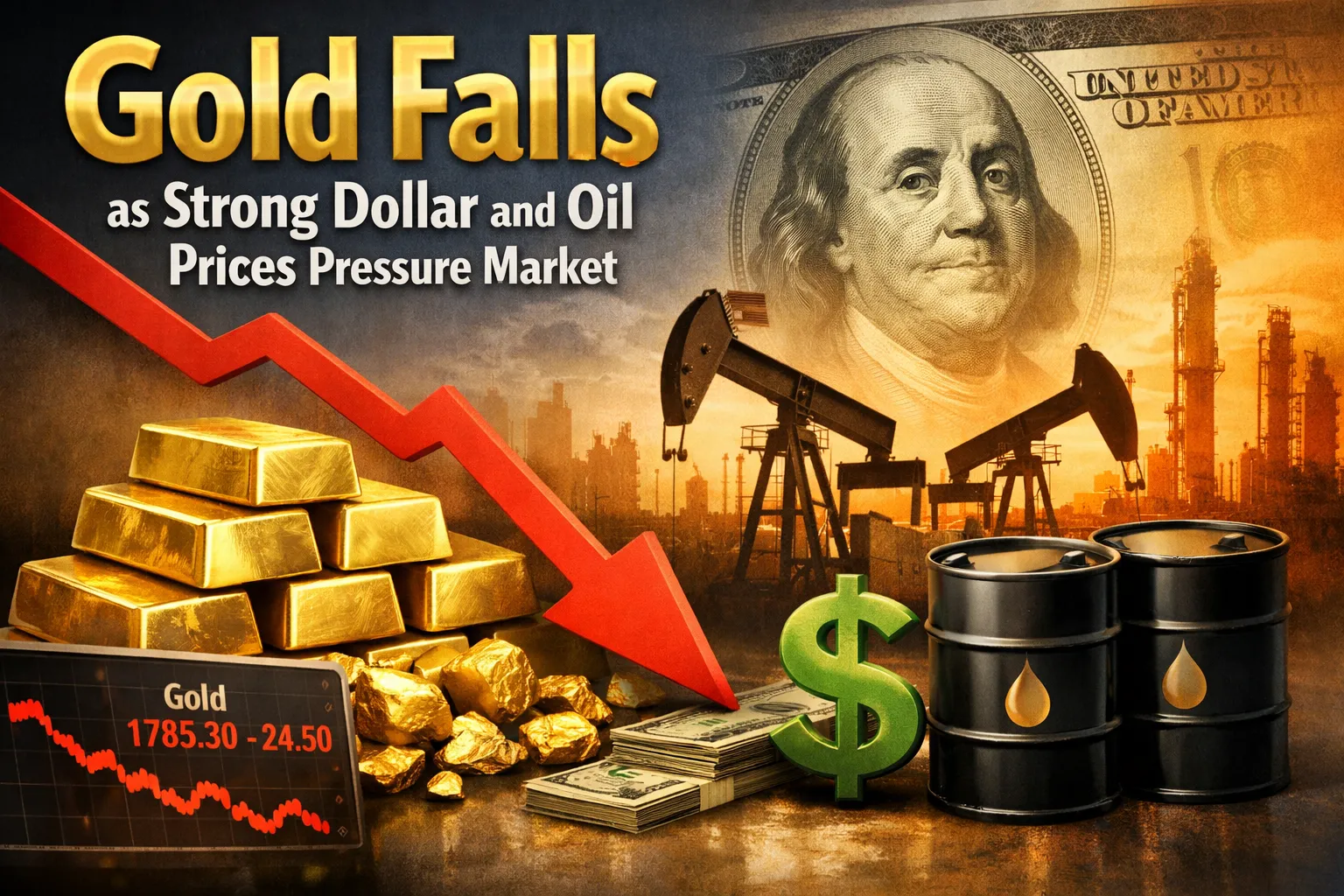
Gold Falls as Strong Dollar and Oil Prices Pressure Market

Gold Falls as Strong Dollar and Oil Prices Pressure Market

March 14 2026, investing.com, financialpost.com Gold prices moved lower at the end of the week, putting the precious metal on track for a second consecutive weekly decline. Despite escalating tensions in the Middle East, investors have increasingly turned to the U.S. dollar as their preferred safe-haven asset. At the same time, rising oil prices and growing inflation concerns are reshaping expectations around global interest-rate policy. Gold pressured despite geopolitical tensions Gold slipped during Friday trading, moving back toward the lower end of its recent range near $5,000 per ounce. The strengthening U.S. dollar has been a key factor behind the decline, as it makes bullion more expensive for international buyers. Although geopolitical conflicts usually support demand for gold, the recent escalation involving the United States, Israel, and Iran has instead boosted demand for the dollar. Energy prices and inflation risks Oil prices have climbed close to $100 per barrel amid concerns about supply disruptions around the Strait of Hormuz. Higher energy costs could spread across the global economy, affecting key sectors such as: · Transportation: higher fuel and logistics costs · Manufacturing: more expensive petrochemical inputs · Agriculture: rising fertilizer and production costs These pressures are increasing fears of broader inflation. Gold market performance this week Indicator Latest Movement Market Signal Spot Gold ~ $5,049/oz Around 0.6-0.7% daily decline Gold Futures ~ $5,049/oz About 1.5% drop Weekly Performance ~2-2.5% loss Second weekly decline Trading Range $5,000 - $5,200 Market remains range-bound Rising inflation concerns have also led investors to reconsider expectations for interest-rate cuts, with many now anticipating the Federal Reserve will keep borrowing costs higher for longer. Gold’s recent decline highlights how inflation fears, energy shocks, and a strong dollar can outweigh its traditional safe-haven appeal. While geopolitical tensions still provide some support, expectations for higher interest rates continue to limit gains. The big question now is: will inflation pressures revive gold’s rally, or keep the metal trapped near its current range?

UA Finance14 March

Track Global Markets in Real Time with UA Finance

Download the app now and access live financial data, expert analysis, and trusted economic news to follow stocks, forex, gold, and cryptocurrencies with ease.