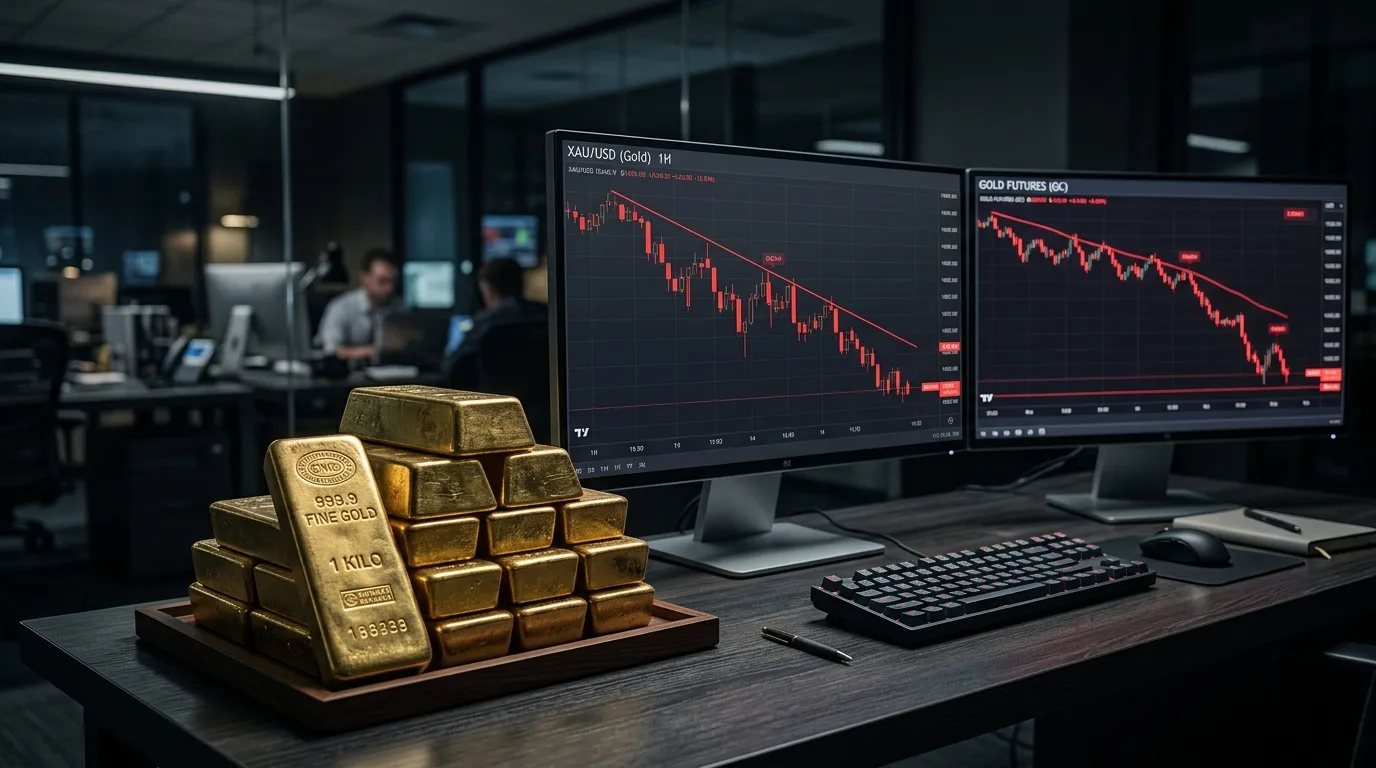
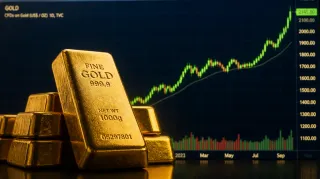
July 20, 2026 – Gold prices today remained near recent highs as it recorded $ 4000 as investors continued to evaluate global economic conditions and expectations for future central bank policy decisions.
Demand for safe-haven assets has helped support the precious metal despite ongoing uncertainty across financial markets.
Economic Reports Remain the Main Focus
Traders are closely watching upcoming inflation figures, employment data, and central bank comments that could provide additional clues about future interest rate decisions. These economic indicators often play a major role in determining short-term movements in gold prices.
Safe-Haven Demand Supports the Market
Gold continues to attract investors seeking protection against market volatility and economic uncertainty.
Concerns about global growth and geopolitical developments have encouraged many investors to maintain exposure to precious metals within diversified investment portfolios.
Central Bank Policies Could Influence Prices
Interest rate expectations remain one of the biggest drivers of the gold market.
Lower borrowing costs generally improve gold's attractiveness because the metal does not generate interest income, making monetary policy an important factor for investors.
Market Participants Watch the Outlook
Analysts expect gold prices to remain sensitive to economic releases and global developments over the coming weeks.
Investors will continue monitoring inflation trends, monetary policy decisions, and broader market sentiment for additional direction.
Read more
Related news

Gold Faces Weekly Loss as Inflation Concerns Offset Safe-Haven Demand
July 19, 2026 –Gold prices remained under pressure despite ongoing geopolitical tensions in the Middle East, as investors weighed the inflationary impact of rising oil prices against the metal’s traditional role as a safe-haven asset. Spot gold traded near $4,016 per ounce, while U.S. gold futures hovered around $4,019 per ounce, leaving bullion on track for its largest weekly decline in more than a month. Inflation Expectations Weigh on Gold Although geopolitical uncertainty typically supports demand for gold, the recent surge in crude oil prices has shifted market attention toward inflation risks. Higher energy prices have reinforced expectations that major central banks, particularly the U.S. Federal Reserve, could maintain tighter monetary policy for longer. Elevated interest rates increase the opportunity cost of holding non-yielding assets such as gold, limiting the metal’s upside potential. Stronger Dollar Adds Further Pressure Gold has also faced headwinds from a firmer U.S. dollar, which makes bullion more expensive for buyers using other currencies. While bargain buying helped prices recover modestly from recent lows, investor sentiment remains cautious as markets continue to assess the outlook for inflation, interest rates, and global economic growth. Markets Look Ahead to Policy Signals Investors are expected to remain focused on upcoming economic data and central bank guidance for clearer signals on the direction of interest rates. Any indication that inflation is easing could improve gold’s outlook by supporting expectations for future monetary policy easing. Conversely, persistent inflation and elevated energy prices may continue to weigh on bullion despite ongoing geopolitical

Gold Rebounds as Middle East Tensions and U.S. Inflation Data Drive Market Focus
July 14, 2026 – Gold prices recovered after touching a two-week low as investors returned to the precious metal amid escalating geopolitical tensions in the Middle East while awaiting key U.S. inflation data that could shape the Federal Reserve’s next policy decision. Spot gold climbed to around $4,019.50 per ounce, while U.S. gold futures rose to approximately $4,026.20, supported by renewed safe-haven demand and a weaker U.S. dollar. Safe-Haven Demand Returns The renewed military confrontation between the United States and Iran has increased uncertainty across global financial markets, encouraging investors to shift toward defensive assets such as gold. Although higher oil prices have raised inflation concerns, geopolitical risks continue to support demand for bullion as investors seek protection against market volatility. Inflation Data Takes Center StageMarkets are now focused on the upcoming U.S. Consumer Price Index (CPI) report, which is expected to provide fresh clues about the Federal Reserve’s interest-rate outlook. A stronger-than-expected inflation reading could reinforce expectations that the Fed will maintain tighter monetary policy for longer, potentially limiting gold’s upside despite ongoing geopolitical uncertainty.Conversely, softer inflation could strengthen expectations for policy easing, providing additional support for bullion prices.Investors Await the Next CatalystGold remains caught between competing macroeconomic forces as safe-haven buying offsets pressure from elevated bond yields and interest-rate expectations. Market participants are expected to closely monitor both inflation data and developments in the Middle East, with either factor likely to determine the precious metal’s next directional move in the coming sessions.

Gold Falls as Rising Oil Prices Strengthen Rate Expectations
July 13, 2026 – Gold prices declined after the renewal of the tensions between the United States and Iran pushed oil prices higher, increasing concerns that inflation could remain elevated and delay any easing in U.S. monetary policy. Spot gold traded near $4,060 per ounce, while U.S. gold around $4,067 per ounce, extending losses for a second consecutive session as investors reassessed the outlook for inflation and interest rates. Higher Oil Prices Pressure Gold The latest escalation in the Middle East has fueled a sharp rise in crude oil prices amid concerns over potential disruptions to energy supplies through the Strait of Hormuz. While geopolitical uncertainty typically supports demand for safe-haven assets such as gold, the accompanying increase in oil prices has also strengthened expectations of higher inflation. Investors increasingly believe that persistent inflation could prompt the Federal Reserve to maintain restrictive monetary policy for longer, reducing the attractiveness of non-yielding assets like gold. Dollar and Treasury Yields Add to WeaknessGold also came under pressure from a firmer U.S. dollar and rising Treasury yields.A stronger dollar makes gold more expensive for buyers using other currencies, while higher bond yields increase the opportunity cost of holding bullion, which does not generate interest. These factors combined to outweigh gold's traditional safe-haven appeal despite ongoing geopolitical uncertainty. Markets Await Fresh Economic Signals Investors are now closely monitoring upcoming U.S. inflation data and Federal Reserve commentary for clues about the future path of interest rates. Market participants expect gold prices to remain sensitive to economic data, monetary policy expectations, and developments in the Middle East, with shifts in inflation and energy markets likely to determine the precious metal's near-term direction.

Gold Prices Track Global Market as Investors Monitor Fed Outlook
July 12, 2026 – Gold prices in Egypt traded in line with global bullion markets, as investors continued to assess the outlook for U.S. monetary policy and geopolitical developments that have supported demand for safe-haven assets.According to Dahab Masr, 24-karat gold traded at EGP 6,701.59 for buying and EGP 6,615.70 for selling. 21-karat gold, the most widely traded purity in Egypt, stood at EGP 5,864.48 for buying and EGP 5,789.32 for selling. The international gold ounce traded around $4,169.90. (Source: Dahab Masr)Global Market Drives Local PricesGold prices remained supported by movements in international bullion markets, where investors continued to favor safe-haven assets amid geopolitical uncertainty and expectations surrounding future interest rate decisions by the U.S. Federal Reserve.Because gold is priced globally in U.S. dollars, fluctuations in international prices and changes in the dollar's strength continue to play a significant role in determining local gold prices across many markets. Expectations that interest rates could remain elevated have also influenced investor positioning, as higher borrowing costs generally limit gold's upside by increasing the appeal of interest-bearing assets. Investor Sentiment Remains in FocusMarket participants are also monitoring developments in global financial markets, including inflation data and central bank policy signals, for indications of gold's next direction.While geopolitical risks have supported demand for bullion, stronger economic data or a more hawkish monetary policy outlook could reduce safe-haven demand. Conversely, any signs of slowing economic growth or easing monetary policy may provide additional support for gold prices.What comes next?Investors will continue watching upcoming U.S. economic data, Federal Reserve communications, and geopolitical developments for further direction in the gold market.As global uncertainty persists, movements in international bullion prices are expected to remain the primary driver of local gold markets in the near term.

Gold Prices Today: Gold Pulls Back as Stronger Dollar Weighs on Bullion
July 7, 2026 – Gold prices today edged lower on Tuesday as the U.S. dollar remained firm, reducing the appeal of this precious metal for overseas buyers. While the stronger greenback pressured bullion, expectations of a less aggressive Federal Reserve and lingering geopolitical uncertainty continued to limit lossesSpot gold traded near $4,164 per ounce, while the U.S. gold futures hovered around $4,168 per ounce, with investors awaiting fresh signals from the Federal Reserve on the future path of interest rates Stronger Dollar Pressures GoldWhen it comes to gold prices today,Spot gold traded near $4,164 per ounce, while the U.S. gold futures hovered around $4,168 per ounce, with the firmer dollar reducing the appeal of bullion for overseas buyers. Market participants remained cautious ahead of the release of the Federal Reserve's meeting minutes, which could provide further clues on the outlook for interest ratesSafe-Haven Demand Limits Losses and Supports Prices Although a stronger dollar weighed on gold, ongoing geopolitical concerns and uncertainty surrounding the global economic outlook continued to support safe-haven demand. Analysts believe these factors could help prevent a sharper decline in bullion prices over the near term.Traders Await Fresh Market CatalystsAttention is now focused on the upcoming U.S. economic data and Federal Reserve communications for additional signals on the interest rate outlook. Gold is expected to stay sensitive to any of the upcoming movements in the U.S. dollar, Treasury yields, and broader risk sentiment in the near termInvestors are closely watching the release of the Federal Reserve's latest meeting minutes for additional clues on monetary policy. Market participants are extremely focused whether recent economic movements will encourage the banks to maintain a cautious stance on interest rates in the upcoming monthsThe market is waiting for new economic triggersTraders are now focused on the upcoming U.S. economic data and Federal Reserve commentary, which are expected to provide clearer direction for gold prices. In the short term, bullion is likely to remain sensitive to movements in the U.S. dollar, Treasury yields, and evolving expectations for interest rates

Gold Slips Below $4,050 as Traders Eye Key U.S. Economic Reports
Gold prices edged lower on Monday, giving back part of last week's gains as traders turned more cautious ahead of a busy week of U.S. economic reports that could influence expectations for the Federal Reserve's next policy decision.Spot gold (XAU/USD) was trading at $4,043.88 per ounce, down $45.38, or 1.11%, from Friday's close of $4,089.26. The decline pushed prices back below the $4,050 mark after the metal briefly approached $4,100 in the previous session.Gold Retreats After Strong Weekly FinishThe session opened at $4,089.26, but selling pressure gradually built throughout the day. Prices slipped to an intraday low of $4,026.19 and failed to recover above the opening level before trading settled.Despite Monday's decline, gold remains well above the levels seen earlier this year, suggesting the broader upward trend remains intact for now.Focus Shifts to U.S. DataInvestors are now turning their attention to a series of closely watched U.S. economic reports due later this week, including consumer confidence, JOLTS job openings, housing data and manufacturing surveys

Gold Advances Toward $4,100 as Investors Turn Focus to Upcoming U.S. Data
Gold prices ended Friday’s session with solid gains, recovering from recent fluctuations and moving back toward the $4,100-per-ounce level, as investors positioned themselves ahead of a fresh round of U.S. economic data that could shape expectations for Federal Reserve policy.Spot gold (XAU/USD) settled at $4,089.26 per ounce, up $61.70, or 1.53%, compared with the previous session. The advance narrowed the gap to the $4,100 mark, a price level that many traders are watching closely after gold’s recent period of heightened volatility.Rally Builds Throughout the SessionTrading began at $4,027.57 per ounce before prices briefly slipped to an intraday low of $3,982.83.Buying momentum strengthened later in the session, lifting gold to a high of $4,097.94, just a few dollars below the next major psychological milestone.The rebound suggests that investor demand for the precious metal remains resilient, even after recent swings across global financial markets.

Gold Rises as US-Iran Talks and Lower Yields Support Demand
June 2, 2026 — Gold prices moved higher on Tuesday as declining U.S. Treasury yields increased the appeal of bullion, while uncertainty surrounding U.S.-Iran peace negotiations continued to support safe-haven demand. Gold Extends Gains on Lower Treasury Yields.Spot gold rose 0.8% to $4,517.73 per ounce, while U.S. gold futures for August delivery gained 0.9% to $4,547.80 per ounce.Analysts noted that lower Treasury yields reduced the opportunity cost of holding non-yielding assets such as gold, helping support prices after recent volatility. US-Iran Negotiations Remain Uncertain.Investor attention remained focused on developments surrounding negotiations between Washington and Tehran.Conflicting reports emerged after Iranian media suggested that talks could be halted, while U.S. President Donald Trump stated that discussions were continuing and progressing rapidly. The uncertainty helped maintain demand for traditional safe-haven assets. Middle East Developments Stay in Focus.Markets also monitored a partial ceasefire announced between Hezbollah and Israel in Lebanon.While the agreement represented a limited step toward de-escalation, investors remained cautious given the broader regional tensions and their potential impact on global markets and energy supplies. Investors Await Key US Economic Data.Traders are now looking ahead to upcoming U.S. labor market data, including nonfarm payrolls and employment reports, for clues about the health of the economy.The data could influence expectations for Federal Reserve policy, particularly as rising energy prices continue to raise concerns about inflation. Comments from Federal Reserve officials are also expected to attract close attention. Other Precious Metals Move Higher.Other precious metals also advanced during the session.Silver gained 2.1% to $76.41 per ounce, platinum rose 1.8% to $1,958.67 per ounce, and palladium added 1.5% to $1,382.33 per ounce, reflecting broader strength across the precious metals complex. Safe-Haven Demand Continues to Support Gold.Analysts said gold remains supported by geopolitical uncertainty, interest-rate expectations, and ongoing demand for defensive assets.Market participants will continue monitoring developments in U.S.-Iran negotiations and upcoming economic indicators for further direction in precious metals markets.

Can Nvidia maintain its leadership position in the expanding AI industry?
May 31, 2026 — Gold prices remained near record levels at the end of May as investors continued seeking safe-haven assets amid geopolitical tensions and uncertainty surrounding developments between the United States and Iran.Gold holds above $4,500 per ounce.International gold prices stayed close to $4,535 per ounce, maintaining strong gains recorded throughout 2026.The precious metal continued to draw support from geopolitical risks, inflation concerns, and ongoing demand for defensive investments as global markets remained volatile.Market participants closely monitored developments in the Middle East, which continued to influence sentiment across commodities and financial markets.Safe-haven demand supports the bullion market.Gold remained one of the strongest-performing major assets this year, benefiting from investor demand for stability during periods of uncertainty.Analysts noted that persistent geopolitical tensions and expectations surrounding global interest rates have continued to provide support for bullion prices despite short-term fluctuations.India's gold prices remain above ₹1.57 lakh.In India, domestic gold prices remained elevated, with 24K gold trading above ₹1.57 lakh per 10 grams.Rates for 22K gold and 18K gold also stayed near historically high levels across major cities, reflecting the strength in global bullion markets.Domestic prices continued to track international gold movements while remaining supported by local demand and broader market uncertainty.Market focus remains on global developments.Investors are expected to remain focused on geopolitical developments, inflation trends, and central bank policy signals, all of which continue to influence gold prices.Despite recent volatility, both global and Indian gold markets ended May near historically elevated levels, highlighting continued demand for precious metals as a defensive asset class.

Analysts Raise Gold Price Forecast 2026 Amid Global Uncertainty
Gold is on track for a record-breaking performance in 2026, according to a recent Reuters poll of analysts and traders. The survey of 30 experts revealed a median gold price forecast 2026 of $4,746.50 per troy ounce, up from $4,275 in October and marking the highest annual projection in Reuters polls since 2012.The surge in gold prices reflects mounting geopolitical tensions, strong central bank purchases, and ongoing concerns over the stability of global economic and financial systems. David Russell, CEO of precious metals dealer GoldCore, noted, "Institutions that have supported global stability for decades are being tested in ways not seen in a generation." Key Drivers Behind Gold’s RallyGold rebounded to near $5,100 recently, following its best day in over 17 years, recovering from the metal’s sharpest two-day decline since 1983. Analysts cite geopolitical risks, central bank buying, U.S. debt concerns, trade uncertainties, and de-dollarisation as key factors sustaining the rally. Deutsche Bank analysts emphasized that the rationale for gold allocations remains strong in 2026.Central Bank Buying and Market TrendsCentral banks are expected to continue expanding their gold reserves to diversify away from the U.S. dollar. Despite this, jewellery demand in key Asian markets may decline due to elevated prices, while investment-driven demand is likely to remain robust.Silver Outlook Also Revised UpwardsSilver forecasts have also been adjusted, with analysts predicting an average price of $79.50 per ounce in 2026, up from $50 in the October poll. Following a record 147% gain in 2025, silver reached $121.64 in January before retreating to $89.70. Analysts warn of continued volatility due to weakening industrial and jewellery demand, as well as easing supply tightness.
commodities and futures contracts latest news

Silver Prices Today Remain Stable as Industrial Demand Supports the Market

Oil Holds Near Multi-Week Highs as Middle East Risks Keep Supply Concerns Alive

Gold Faces Weekly Loss as Inflation Concerns Offset Safe-Haven Demand

Cooling U.S. Inflation Eases Pressure on Fed, but Rate Outlook Remains Uncertain