
Oil Surges Past 107 USD as Hormuz Disruption Squeezes Global Supply



September 15, 2026 – Global crude oil prices accelerated sharply on Tuesday, driving the international Brent benchmark firmly above the 107 USD per barrel threshold.
This immediate upward pricing shock is a direct mechanical response to escalating maritime disruptions within the critical Strait of Hormuz choke-point. With commercial transit severely restricted through the Persian Gulf, macroeconomic allocators are rapidly pricing in a massive physical supply deficit.
Institutional trading desks recognize that this bottleneck effectively traps millions of barrels of crude inventory, severing European and Asian refineries from their primary energy source.
For commodity funds, this severe logistical friction elevates the geopolitical risk premium to multi-year highs, forcing aggressive near-term accumulation of available spot barrels.
Choke-point Friction and Inventory Draw-downs
The fundamental catalyst supporting this violent rally is the sheer volume of global petroleum currently constrained by the Hormuz disruption.
Historically, roughly twenty percent of total global petroleum consumption passes through this narrow maritime corridor on a daily basis. Quantitative analysts note that without this steady outward flow, global commercial inventories will deplete at an unsustainable velocity.
Asian manufacturing hubs, which rely disproportionately on Gulf exports, are already initiating emergency spot market purchases to secure baseline operating reserves.
This panic accumulation mechanically forces the forward yield curve into extreme backwardation, where immediate delivery commands a massive premium over future contracts.
Strategic Reserves and Macroeconomic Policy
As Brent crude establishes structural support above 107 USD, the macroeconomic implications extend far beyond the energy sector. Sustained triple-digit oil prices directly inject severe inflationary pressures into the global economy, heavily complicating the monetary policy outlook for major central banks.
Fixed-income desks observe that rising foundational energy costs could force the Federal Reserve to maintain restrictive interest rates longer than initially projected.
To mitigate this immediate supply shock, market participants are closely monitoring potential emergency releases from strategic petroleum reserves across developed nations.
However, institutional allocators project that localized reserve deployments will prove insufficient to balance global markets if the Hormuz transit blockade persists into the fourth quarter.
Capital Rotation and Forward Positioning
From a market positioning standpoint, algorithmic trading models maintain a heavy structural long bias against physical crude and upstream energy equities.
Exploration and production conglomerates are experiencing massive capital inflows as institutional managers rotate into defensive, cash-generating commodity assets. Conversely, energy-intensive industrial sectors face severe valuation multiple compression as soaring input costs threaten forward operating margins.
Until sovereign naval escorts or diplomatic resolutions restore baseline commercial transit through the Strait, physical buyers must continue bidding up alternative global supply nodes.
Trading desks project that any further deterioration in maritime security will quickly propel benchmark crude toward the 115 USD threshold.
Read more
 Brent Crude Climbs to 96 USD as Escalating U.S.-Iran Tensions Threaten Maritime Chokepoints
September 4, 2026 – Global crude benchmarks violently reversed their late-summer slump this week, with Brent crude briefly piercing the 96 USD per barrel threshold.The aggressive rally is entirely driven by a massive injection of geopolitic…
Donia Saad•04 September Oil Prices Surge as Geopolitical Supply Risks Counter OPEC+ Demand Revisions
August 16, 2026 – Global crude oil prices edged higher this week, with Brent crude reaching $88.52 per barrel and West Texas Intermediate (WTI) rising to $82.40 per barrel.The price increase reflects renewed energy market volatility as geop…
Donia Saad•16 August Oil Prices Climb Above $84 as U.S.-Iran Conflict Deepens Supply Fears
July 14, 2026 –Oil Prices Climb Above $84 as U.S.-Iran Conflict Deepens Supply Fears ,Oil prices extended their rally after escalating military exchanges between the United States and Iran intensified concerns over crude supplies and shippi…
Donia Saad•14 July Oil Jumps Over 2% as Iran Closes Strait of Hormuz
June 11, 2026 – The price of oil rose by over 2% after the announcement from Iran that the Strait of Hormuz was shut down due to new attacks on their facilities by the Americans. Brent crude rose to $94.58 per barrel, while U.S. West Texas…
UA Finance•11 June Brent Crude Above $100 Fuels Supply Fears
April 24, 2026, saw Brent crude above $100 surge back into focus as supply disruptions tightened global markets. The sharp move in Brent crude above $100 highlights growing imbalance risks. Brent Crude Above $100: Rally Raises Alarm Brent c…
UA Finance•25 April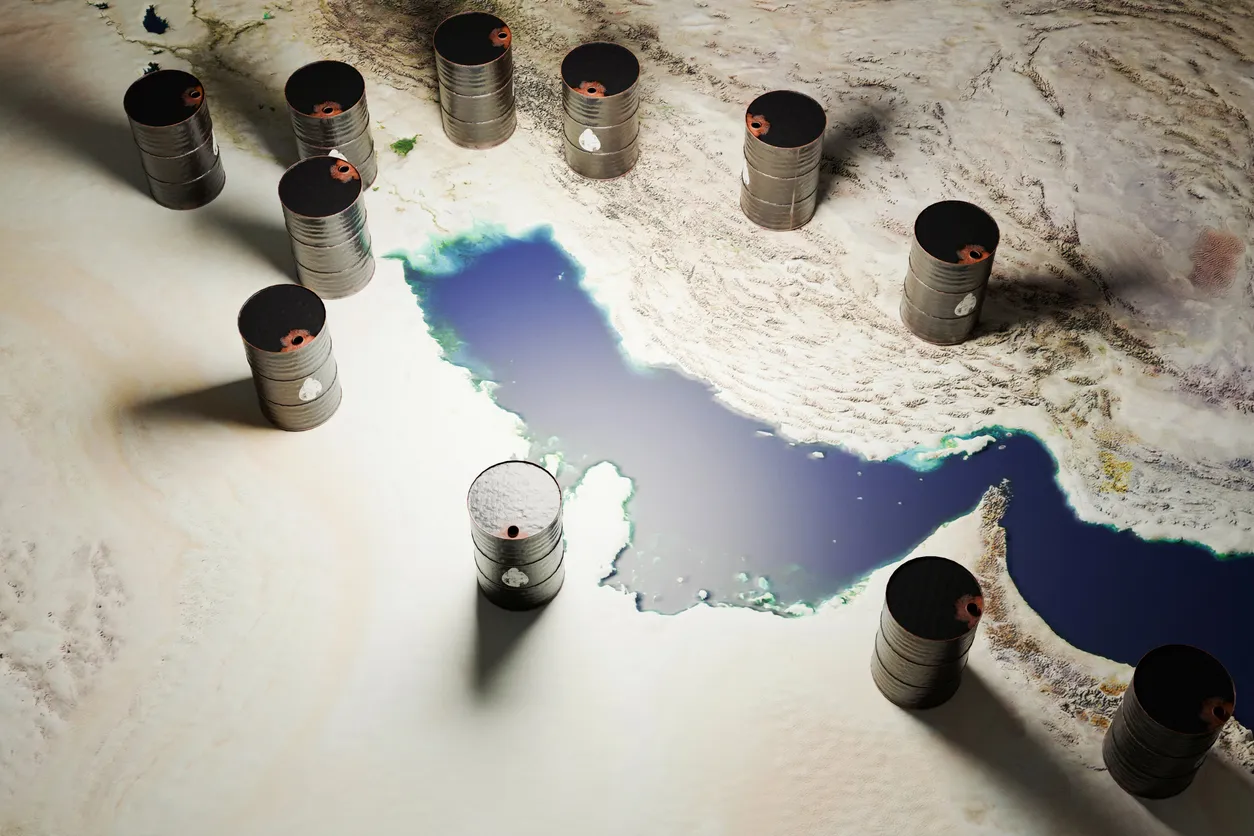 Oil Surges Past $100 as Hormuz Tensions Deepen Fast
 On April 23, 2026, oil prices climbed sharply as stalled US-Iran talks and ongoing disruptions in the Strait of Hormuz tightened global supply expectations, lifting crude benchmarks above key levels. Oil Rally Ignites as Diplomatic Deadlo…
UA Finance•23 April Oil Surges Past $102 on U.S.-Iran Blockade Fears
 On April 13, 2026, oil prices surged sharply as geopolitical tensions intensified, pushing crude above the $102 mark. The oil rally comes ahead of a looming U.S. blockade on Iran, fueling supply concerns and market volatility. Oil Rally I…
UA Finance•13 April Oil Jumps Above $100 as US-Iran Talks Break Down
 April 13, 2026, saw an oil surge grip global markets after US-Iran peace talks collapsed, sending shockwaves through currencies and equities. The oil surge reshaped investor sentiment, lifting the dollar while dragging stocks lower. Oil S…
UA Finance•13 April Crude Oil Surges as Middle East Supply Threats Intensify
 On Thursday, April 9, 2026, as supply risks grew, energy markets responded strongly to rising geopolitical tensions, with traders closely monitoring the regional developments to assess the long-term effects on global fuel prices and econo…
UA Finance•09 April Oil Prices Aim for More Increases Due to Middle East Conflict
Oil prices are positioned to rise even higher on Sunday, March 15th, 2026, due to the ongoing conflicts in the Middle East, which are threatening key oil export facilities and shipping routes. Oil Rallies as Export Risks Deepen Oil prices w…
UA Finance•16 March