
Goldman Sachs Cuts Kospi 12-Month Target by 25 Percent as Artificial Intelligence Trade Unravels


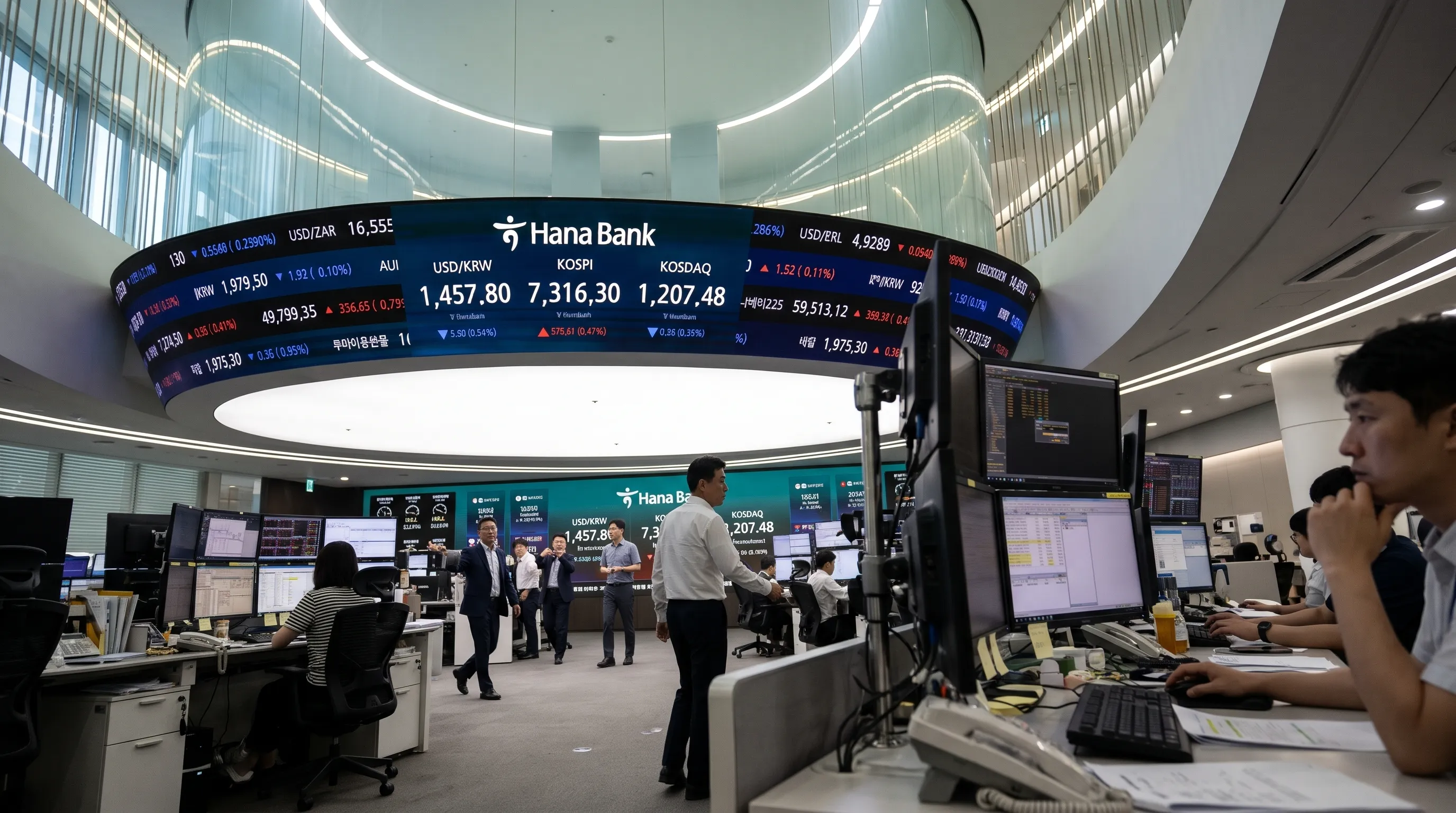
October 25, 2026 – Wall Street investment bank Goldman Sachs reduced its 12-month target for South Korea's benchmark Kospi index by 25 percent on Sunday, slashing its forecast from 12,000 to 9,000 index points.
The sharp valuation downgrade follows a protracted equity selloff that saw the Kospi tumble more than 35 percent from its June peaks amid mounting skepticism surrounding artificial intelligence hardware monetization.
For macroeconomic allocators, the recalibration highlights how severe multiple compression in global semiconductor manufacturing hubs can rapidly reverberate across broader emerging market equities.
Trading desks observe that despite the headline target reduction, the revised 9,000 forecast still implies more than 60 percent upside potential from current depressed market levels.
Semiconductor Valuations and Earnings Scenarios
Goldman Sachs strategists led by Timothy Moe emphasized that global financial markets are currently pricing an excessively negative fundamental outlook into South Korean technology leaders.
The bank's quantitative models indicate that current valuations effectively discount a massive 65 percent contraction in aggregate semiconductor earnings for 2027.
Analysts designated that projection as overly pessimistic, pointing out that non-memory equities, which constitute approximately half of the index weighting, currently trade at 7.6 times forward earnings.
Overall, the Kospi's 12-month forward price-to-earnings ratio has collapsed to roughly 4 times, marking the lowest valuation multiple recorded across 18 major international stock markets since 2006.
Asset managers note that South Korea has shifted rapidly from one of the world's top-performing equity destinations earlier in 2026 to one of its absolute cheapest, with headline valuations falling to nearly half those of regional peers.
Sector Positioning and Market Bottom Prospects
Despite cutting index targets to accommodate more conservative valuation multiples, Goldman Sachs reiterated that the risk-to-reward ratio for South Korean equities remains highly attractive.
The brokerage highlighted persistent long-term capital opportunities across domestic power infrastructure, industrial, corporate governance beneficiaries, and cultural export sectors.
Simultaneously, domestic institutions in Seoul point toward stabilizing technical patterns across key technology heavyweights including Samsung Electronics and SK Hynix.
Analysts at KB Securities noted that the Kospi appears to be forming a double-bottom technical foundation after holding critical cyclical troughs established in late July and mid-October.
Equity funds project that near-term price discovery will hinge directly on semiconductor capital expenditure visibility and central bank liquidity conditions as markets head into November.
Read more
 Nvidia’s Upbeat Revenue Guidance Triggers Asian Tech Rally as AI Buildout Accelerates
August 27, 2026 – Asian equity markets surged Thursday morning following a massive fiscal second-quarter earnings report from U.S. semiconductor giant Nvidia.The blockbuster results effectively wiped away lingering fears of an artificial in…
Donia Saad•27 August SK Hynix Shares Surges Over 12% as Record ₩40 Trillion Buyback Reclaims Market Control
August 20, 2026 – Shares of SK Hynix Inc. rallied over 12% during Seoul trading on Thursday, sparking a broad technical rebound across Asian semiconductor listings.The sudden price surge triggered a temporary buy-side trading halt mechanism…
Donia Saad•20 August Global Investors Reassess AI Spending as Big Tech Earnings Raise Questions Over Returns
July 26, 2026 – Investor sentiment towards artificial intelligence is entering a new phase as markets increasingly demand measurable financial returns rather than continued expansion in AI spending. Recent earnings from major technology com…
Donia Saad•26 July Asian Stocks Rebound as Investors Shift Focus Back to Fundamentals
July 21, 2026 – Asian stock markets advanced after several sessions of volatility as easing oil prices and renewed hopes for diplomatic progress in the Middle East helped improve investor sentiment. Regional benchmarks recovered despite lin…
Donia Saad•21 July South Korea’s Rate Hike Signals Inflation Fight Is Far From Over
July 16, 2026 – South Korea’s central bank raised its benchmark interest rate for the first time in more than three years, signaling that inflation concerns continue to outweigh the need for lower borrowing costs despite an improving econom…
Donia Saad•16 July