

British Pound Slides Toward One Point Three Three Against United States Dollar Following Divergent Central Bank Policies


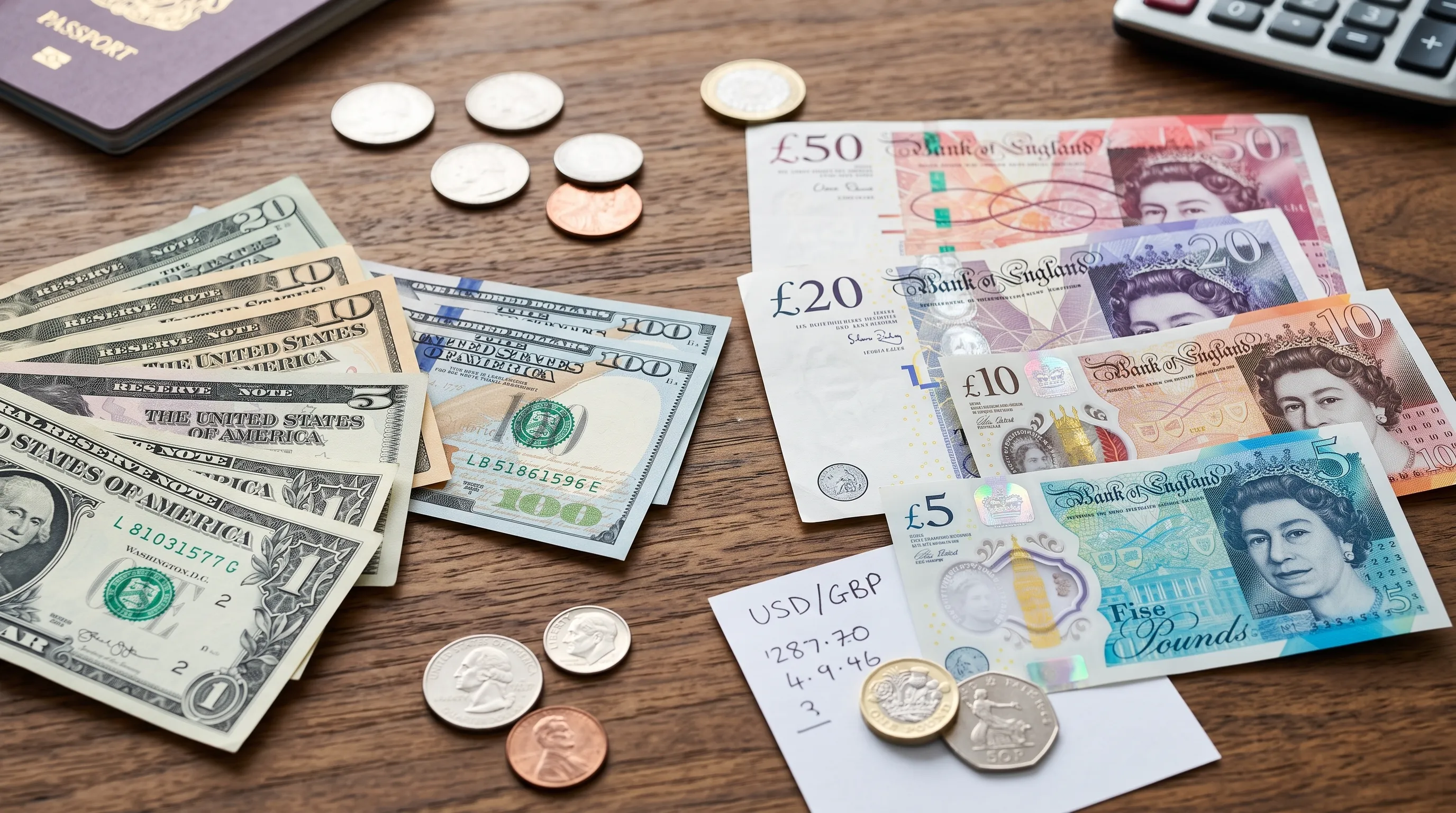
September 22, 2026 – The British pound depreciated sharply against the United States dollar during Tuesday trading, extending a pronounced multi-day selloff across global foreign exchange markets.
The sterling exchange rate recently fell to one point three three six nine against the greenback, retreating significantly from its mid-August peak above one point three five.
For macroeconomic allocators, the primary catalyst driving this currency depreciation is the stark policy divergence between the Bank of England and the United States Federal Reserve.
While the Federal Reserve aggressively tightened monetary conditions last week, the Bank of England opted to maintain its benchmark borrowing costs, structurally weakening the pound.
Trading desks recognize that as long as the interest rate differential favors American sovereign debt, the British currency will face sustained downward pressure from institutional carry trades.
Divergent Monetary Policy and Rate Differentials
During last week's critical monetary policy meetings, the Bank of England's Monetary Policy Committee voted six to three to maintain the domestic bank rate at three point seven five percent.
Governor Andrew Bailey cited a soft domestic labor market and easing domestic inflationary pressures as primary justifications for holding rates steady.
Conversely, the United States Federal Reserve executed a quarter-point rate hike under Chairman Kevin Warsh, elevating the federal funds target range to four point zero zero percent.
Quantitative analysts note that this aggressive American move directly inverted the transatlantic yield differential, immediately pulling institutional capital out of sterling-denominated assets.
As global asset managers rotate into higher-yielding United States Treasury bonds, the resulting capital flight mechanically depresses the spot valuation of the British pound.
Forward Outlook and Technical Support
From a market positioning standpoint, technical analysts warn that the sterling selloff appears increasingly stretched following five consecutive days of consecutive losses.
Currency strategists at United Overseas Bank observe that the aggressive downward momentum could test critical structural support levels near one point three three three five.
However, a mild mean-reversion bounce remains possible if short-term speculative positioning becomes too heavily skewed toward the United States dollar.
Fixed-income desks continue monitoring energy markets closely, as the Bank of England warned that persistent Middle Eastern conflicts could generate secondary inflationary shocks.
Until the Bank of England signals a willingness to match the Federal Reserve's restrictive trajectory, algorithmic trading models will likely maintain a bearish structural bias against the sterling.
Mentioned in this article
Read more
 US Dollar Index Breaks 100 Parity as Resilient Wage Data Sustains September Rate Hike Bets
September 6, 2026 – The US Dollar Index (DXY) successfully breached the critical 100 psychological threshold during early Sunday trading sessions.Institutional capital continues to aggressively accumulate the greenback following a complex a…
Donia Saad•06 September US Dollar Index Eyes 100 Breakout as September Rate Hike Bets Surge Past 60%
September 2, 2026 – The US Dollar Index (DXY) continued its aggressive upward trajectory during Wednesday trading, pushing toward the 99.85 level. Institutional trading desks are actively preparing for a potential breakout above the critica…
Donia Saad•02 September US Dollar Index Defends 99.66 as Hawkish Fed Projections Halt a Historic Summer Selloff
August 30, 2026 – The US Dollar Index (DXY) stabilized near 99.66 during Friday trading, successfully defending critical technical support after suffering its steepest weekly drops of the summer.While retail currency traders have spent week…
Donia Saad•30 August Euro Advances Past $1.1680 as Dovish Fed Minutes Spark Broad Dollar Pressure
August 20, 2026 – The Euro surged over 0.8% against the U.S. Dollar during Thursday trading, crossing the $1.1688 mark to log one of its strongest single-session bullish breakouts in recent months.The sharp single-currency rally follows the…
Donia Saad•20 August Currency Equilibrium: Global Foreign Exchange Markets React to Shifts in Dollar Momentum
August 14, 2026 –The US Dollar Index held steady at 102.35 today, reflecting balanced trading across major currency pairs as financial markets process fresh macroeconomic data. Foreign exchange traders are weighing updated consumer spending…
Donia Saad•14 August