

Oil Settles Lower as Europe Taps Diesel Reserves and OPEC Maintains Quotas


October 4, 2026 – Global crude oil prices settled lower on Friday after European leaders agreed to release emergency diesel stockpiles following a formal request from United States President Donald Trump.
The intervention is explicitly designed to lower domestic fuel prices and reduce American reliance on imported refined products during a period of severe geopolitical friction.
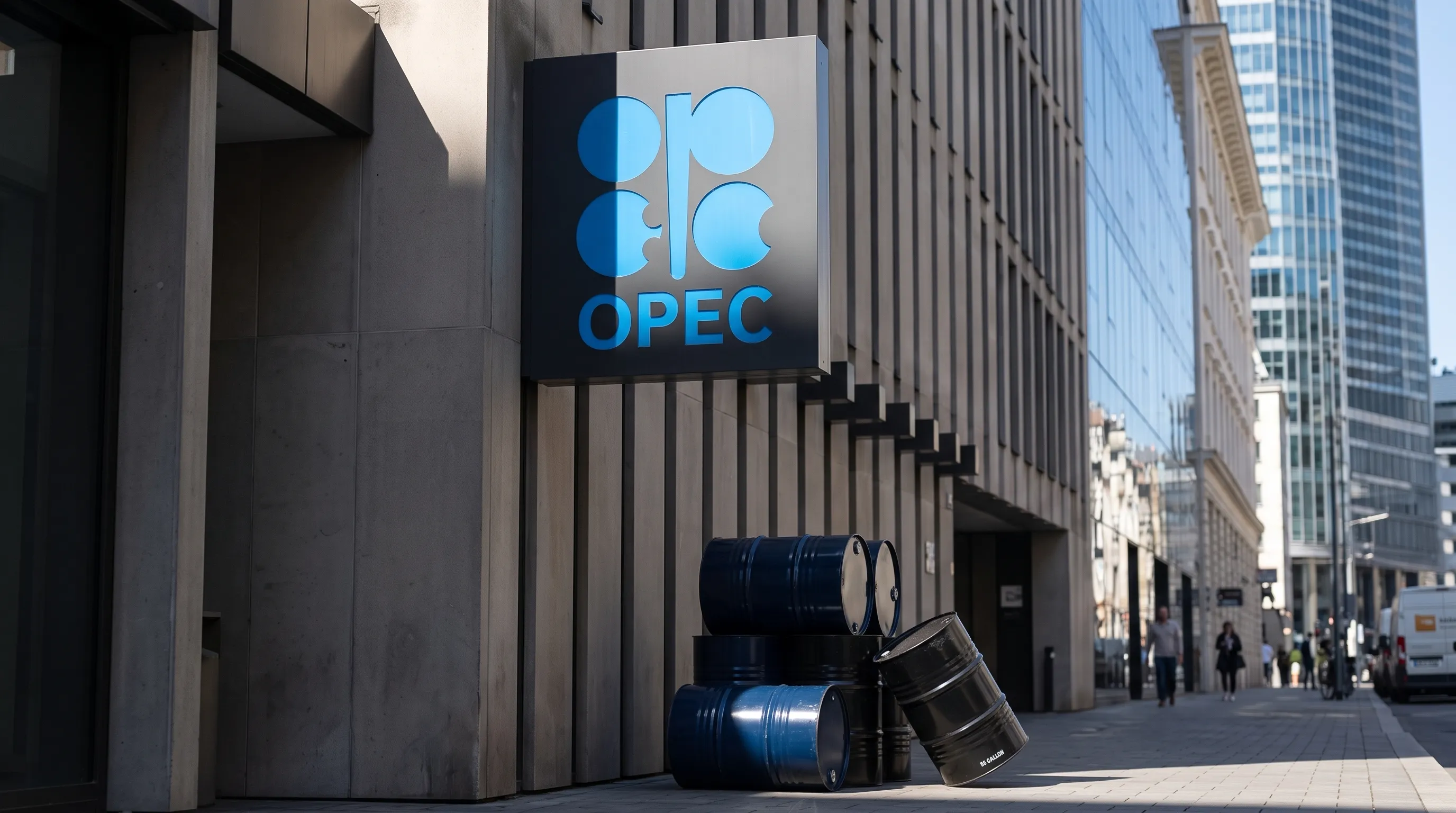
Simultaneously, delegates from the Organization of the Petroleum Exporting Countries and its allies reached an outline agreement to keep crude production quotas entirely unchanged for the month of November.
For macroeconomic allocators, this dual dynamic highlights the escalating tug-of-war between Western political interventions and Middle Eastern supply management.
Trading desks recognize that as artificial supply injections hit the European market, the underlying structural deficit remains anchored by strict OPEC production constraints.
European Diesel Release and Market Pricing
The immediate catalyst for Friday's price suppression was the coordinated European agreement to deploy strategic reserves. Brent crude futures ultimately settled down six cents to one hundred two point two five USD per barrel.
The United States West Texas Intermediate contract experienced a steeper decline, dropping one point seven six USD to close at ninety-one point one one USD per barrel.
Despite the daily pullback, Brent managed to secure a fractional weekly gain of zero point one one percent, while the American benchmark declined one point six percent for the week.
Quantitative analysts note that injecting European diesel into the global market temporarily alleviates severe middle distillate shortages, pulling the broader crude complex lower.
OPEC Quotas and Production Constraints
While Western nations deploy strategic reserves, major oil producers continue prioritizing strict market management.
Delegates from the core OPEC alliance confirmed they will formally ratify their existing production roadmap, maintaining steady output targets through November.
This decision extends the formal unwinding of supply cuts made in previous years, although much of this restored capacity exists only on paper due to severe regional disruptions.
Industry sources confirm that actual production from core members remains roughly five million barrels per day below pre-war levels, heavily constrained by the ongoing Middle East conflict.
Fixed-income desks observe that this persistent supply tightness restricts any substantial downward pressure on long-term crude valuations, effectively offsetting the bearish impact of reserve releases.
Asian Supply Signals and Forward Outlook
Adding to the complex macroeconomic supply picture, Chinese refiners recently suspended exports of refined oil products to preserve domestic inventories.
This export halt further tightened the global refined product market, contrasting sharply with the European decision to release emergency stockpiles.
Asset managers project that crude markets will remain highly volatile as traders balance artificial supply injections against fundamental production constraints.
Until geopolitical tensions ease, the physical market deficit will likely maintain a strong valuation floor for both Brent and West Texas Intermediate contracts.
Commodity funds expect the ninety USD threshold to serve as formidable structural support for the American benchmark throughout the fourth quarter.
Read more
 Brent Crude Tests 84 USD as Weak Chinese Manufacturing Data Accelerates the Bearish Rotation
August 31, 2026 – Global crude benchmarks extended their structural decline on Monday, closing out a highly volatile August trading month with severe downward pressure.Brent crude futures slipped toward 84.35 USD per barrel, while West Texa…
Donia Saad•31 August Oil Plummets Toward 86 USD as Iran-Oman Hormuz Talks Obliterate the Middle East Risk Premium
August 26, 2026 – Global crude benchmarks experienced a severe selloff during Wednesday trading, extending a two-day plunge that wiped nearly 6% off the energy complex. Brent crude futures tumbled toward 86.20 USD per barrel, while West Tex…
Donia Saad•26 August Oil Retreats Toward 92 USD as Trump’s ‘Crushing’ Economic War on Iran Strips Out Military Risk Premium
August 24, 2026 – Global crude benchmarks shed roughly 2% during Monday’s trading session, with Brent crude futures sliding toward 92.68 USD per barrel and West Texas Intermediate (WTI) dropping to 85.39 USD.The intraday selloff follows the…
Donia Saad•24 August Oil Benchmark Logs Second Weekly Gain as U.S. Shifts Strategy to Financial Isolation Over Direct Military Expansion
August 23, 2026 – Global crude benchmarks closed out the trading week near multi-week highs, with Brent crude futures advancing to $93.96 per barrel and West Texas Intermediate (WTI) rising to $86.94 per barrel.The 5% weekly gain marks the…
Donia Saad•23 August Oil Prices Hold Steady Near $92 as Traders Weigh Middle East Geopolitical Risks
August 20, 2026 – Global crude benchmarks held steady during Thursday’s session, with Brent trading near $91.98 per barrel and West Texas Intermediate (WTI) hovering around $84.52 per barrel.Energy markets are currently navigating a balance…
Donia Saad•20 August