

Trump’s Iran Sanctions Test Historic Relationships as ‘Operation Economic Outcast’ Forces Global Trade Realignments


August 26, 2026 – The Trump administration has officially launched "Operation Economic Outcast," unleashing an unprecedented wave of secondary sanctions designed to completely isolate the Islamic Republic of Iran from the global financial system.
While the direct impact on Tehran is immediate, institutional capital is focused entirely on the broader macroeconomic fallout. By threatening to cut foreign governments and corporations out of the US Dollar system if they maintain Iranian commercial ties, the White House is aggressively testing some of the world's most delicate historic trade relationships.
The success of this financial blockade no longer depends on American policy alone; it hinges entirely on the compliance of crucial economic powers like China, India, and the United Arab Emirates (UAE).
The UAE Pivot and Middle East Rerouting
The first major structural casualty of the new US sanctions policy is the historic re-export gateway operating out of the United Arab Emirates.
Facing the immediate threat of secondary sanctions from Washington, the UAE—traditionally Iran's single biggest trading partner in the Middle East—abruptly suspended trade and financial transactions with Tehran this week. This sudden closure chokes off the primary financial transit hub used to facilitate Iranian imports and exports around the globe.
While this compliance represents a major diplomatic victory for the United States, it has sparked fierce rhetoric from Tehran. Iranian officials have explicitly vowed to retaliate against neighboring Gulf countries that participate in the "economic war," heavily raising the stakes for regional logistics and global shipping insurance premiums.
China's Oil Dependency and Banking Shield
The ultimate arbiter of Washington’s economic offensive remains Beijing, which continues to serve as Iran's most critical crude oil customer and economic lifeline.
The US Treasury recently designated over 60 entities and vessels linked to Iranian illicit finance, deliberately targeting several Chinese nationals and front companies in the process. However, Washington has carefully avoided sanctioning major Chinese financial institutions, recognizing that doing so could ignite a devastating reciprocal trade war between the world's two largest economies.
China has publicly maintained that it is illegal for its citizens to comply with unilateral US sanctions. Energy analysts are closely watching whether Beijing will quietly reduce its intake of discounted Iranian barrels to appease Washington, or if it will utilize alternative payment rails to circumvent the US Dollar entirely, thereby accelerating global de-dollarization efforts.
India's Strategic Squeeze on Exports
Caught directly in the crossfire of this geopolitical standoff is India, which relies heavily on the now-shuttered Dubai routing to export agricultural goods to Iran.
The sudden closure of UAE payment gateways immediately jeopardizes hundreds of millions of dollars in Indian Basmati rice, tea, and pharmaceutical exports. Furthermore, New Delhi had recently revived a crude oil import channel with Tehran, importing approximately 707 million USD worth of Iranian oil in the first half of 2026 under previous regional ceasefire exemptions.
With Washington demanding total financial isolation, India is being forced to choose between abandoning a historic regional partner and risking catastrophic exclusion from American financial markets. Market participants view this Indian dilemma as the ultimate litmus test for whether "Operation Economic Outcast" can effectively sever Iran's remaining economic lifelines without fracturing broader emerging market alliances.
Read more
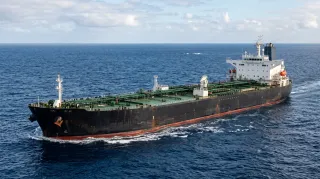 Oil Plummets Toward 86 USD as Iran-Oman Hormuz Talks Obliterate the Middle East Risk Premium
August 26, 2026 – Global crude benchmarks experienced a severe selloff during Wednesday trading, extending a two-day plunge that wiped nearly 6% off the energy complex. Brent crude futures tumbled toward 86.20 USD per barrel, while West Tex…
Donia Saad•26 August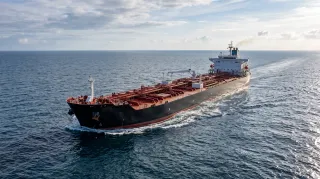 Oil Retreats Toward 92 USD as Trump’s ‘Crushing’ Economic War on Iran Strips Out Military Risk Premium
August 24, 2026 – Global crude benchmarks shed roughly 2% during Monday’s trading session, with Brent crude futures sliding toward 92.68 USD per barrel and West Texas Intermediate (WTI) dropping to 85.39 USD.The intraday selloff follows the…
Donia Saad•24 August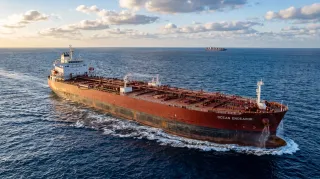 Oil Benchmark Logs Second Weekly Gain as U.S. Shifts Strategy to Financial Isolation Over Direct Military Expansion
August 23, 2026 – Global crude benchmarks closed out the trading week near multi-week highs, with Brent crude futures advancing to $93.96 per barrel and West Texas Intermediate (WTI) rising to $86.94 per barrel.The 5% weekly gain marks the…
Donia Saad•23 August OECD Cuts Global Growth Outlook Amid Iran Conflict Risks
June 3, 2026 — The OECD has revised its global economic outlook downward, warning that continued geopolitical tensions—particularly related to the conflict involving Iran—are weighing on global growth and increasing uncertainty for the wor…
UA Finance•03 June China Banks Halt Fresh Refinery Loans After US Sanctions
 Thursday, May 7, 2026, brought fresh pressure to China’s refining sector after reports emerged that major lenders were told to pause new financing for refiners targeted by recent U.S. sanctions linked to Iranian oil purchases. China Refin…
UA Finance•07 May