

United States Dollar Advances Against Egyptian Pound as Interbank Rates Test 54.56 Pounds


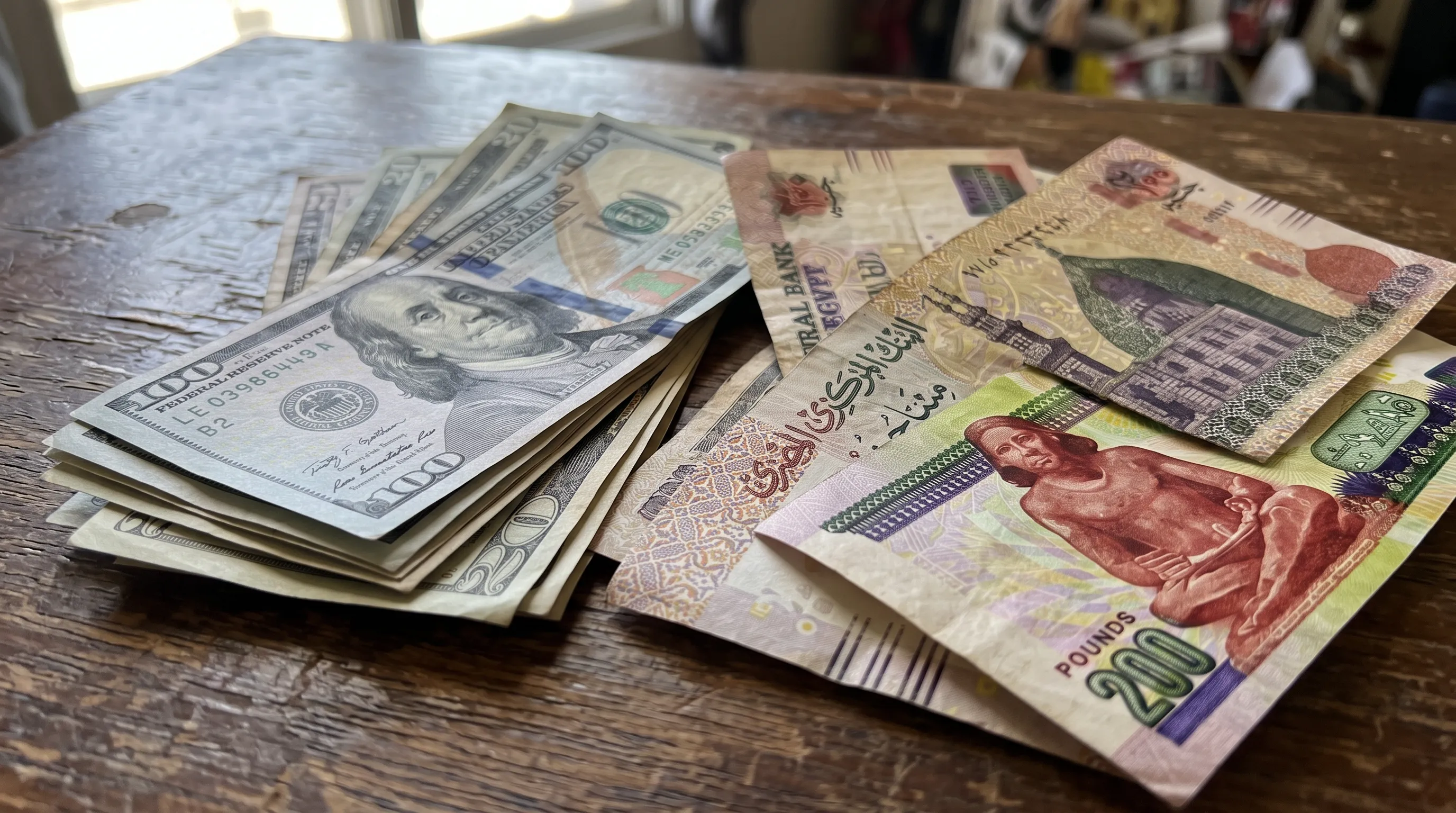
October 22, 2026 – The United States dollar gained ground against the Egyptian pound during Thursday interbank trading, climbing toward 54.56 Egyptian pounds across major domestic financial institutions.
The greenback strengthened approximately 0.13 Egyptian pounds compared to Wednesday's close, extending its upward trajectory as corporate foreign exchange demand rebounded.
For macroeconomic allocators, the exchange rate dynamic underscores ongoing balance of payments management as Egyptian authorities navigate elevated import bills and external debt service requirements.
Trading desks observe that state-owned lenders, including the National Bank of Egypt and Banque Misr, quoted the United States dollar at 54.46 Egyptian pounds for buying and 54.56 Egyptian pounds for selling.
Interbank Liquidity and Commercial Bank Rates
The upward adjustment in foreign exchange rates was broadly synchronized across both private and state-backed commercial banking desks.
Commercial International Bank and Suez Canal Bank posted competitive quotes, pricing greenback purchase bids between 54.35 and 54.46 Egyptian pounds.
The Central Bank of Egypt recorded its official weighted average exchange rate near 54.33 Egyptian pounds for purchases and 54.47 Egyptian pounds for sales.
Quantitative analysts note that spot interbank pricing has steadily advanced from 52.28 Egyptian pounds recorded at the beginning of October, reflecting an aggregate monthly depreciation of roughly 4.4 percent.
Asset managers emphasize that this measured currency flexibility remains central to maintaining official foreign exchange liquidity and preventing informal parallel markets from re-emerging.
External Funding and Structural Reforms
Egypt continues to lean on multilateral financing agreements and strategic foreign direct investment to anchor long-term currency stability.
The continuous disbursement of loan tranches from the International Monetary Fund has expanded total gross official reserves above 46 billion United States dollars.
However, elevated global commodity prices and sustained disruptions across the Red Sea trade corridor continue to constrain Suez Canal transit revenues.
Equity funds project that until non-oil export competitiveness and localized industrial production accelerate materially, import financing pressures will maintain an upward bias for the foreign exchange pair.
Fixed-income desks expect local treasury bill yields to remain firmly above 26 percent as the central bank prioritizes domestic liquidity absorption to curb imported inflation.
Read more
 US Dollar Index Defends 99.66 as Hawkish Fed Projections Halt a Historic Summer Selloff
August 30, 2026 – The US Dollar Index (DXY) stabilized near 99.66 during Friday trading, successfully defending critical technical support after suffering its steepest weekly drops of the summer.While retail currency traders have spent week…
Donia Saad•30 August Currency Equilibrium: Global Foreign Exchange Markets React to Shifts in Dollar Momentum
August 14, 2026 –The US Dollar Index held steady at 102.35 today, reflecting balanced trading across major currency pairs as financial markets process fresh macroeconomic data. Foreign exchange traders are weighing updated consumer spending…
Donia Saad•14 August U.S. Dollar Price Today: Dollar Index (DXY) Trades Around 98.76 as Traders Await Fresh Economic Direction
August 5, 2026 –The U.S. Dollar Index hovered near 98.76 on Wednesday as currency markets remained relatively quiet before the release of several important U.S. economic indicators. Investors avoided making significant positions while waiti…
Donia Saad•05 August U.S. Dollar Today Remains Resilient as Markets Await Federal Reserve Guidance
July 28, 2026 – The U.S. Dollar held relatively steady on Tuesday, trading near 97.4, as investors remained cautious ahead of the Federal Reserve’s latest monetary policy announcement. Currency markets showed limited movement as traders wai…
Donia Saad•28 July U.S. Dollar Index Analysis: Stronger Treasury Yields Keep the Dollar Firm Despite Market Uncertainty
July 23, 2026 –The U.S. Dollar Index traded near 101.20 on Thursday, remaining firm as rising U.S. Treasury yields and expectations of another Federal Reserve rate increase continued to support the greenback. While investors remain cautious…
Donia Saad•23 July