
Silver Prices Retreat Below 60 USD per Ounce Amid Broader Market Volatility


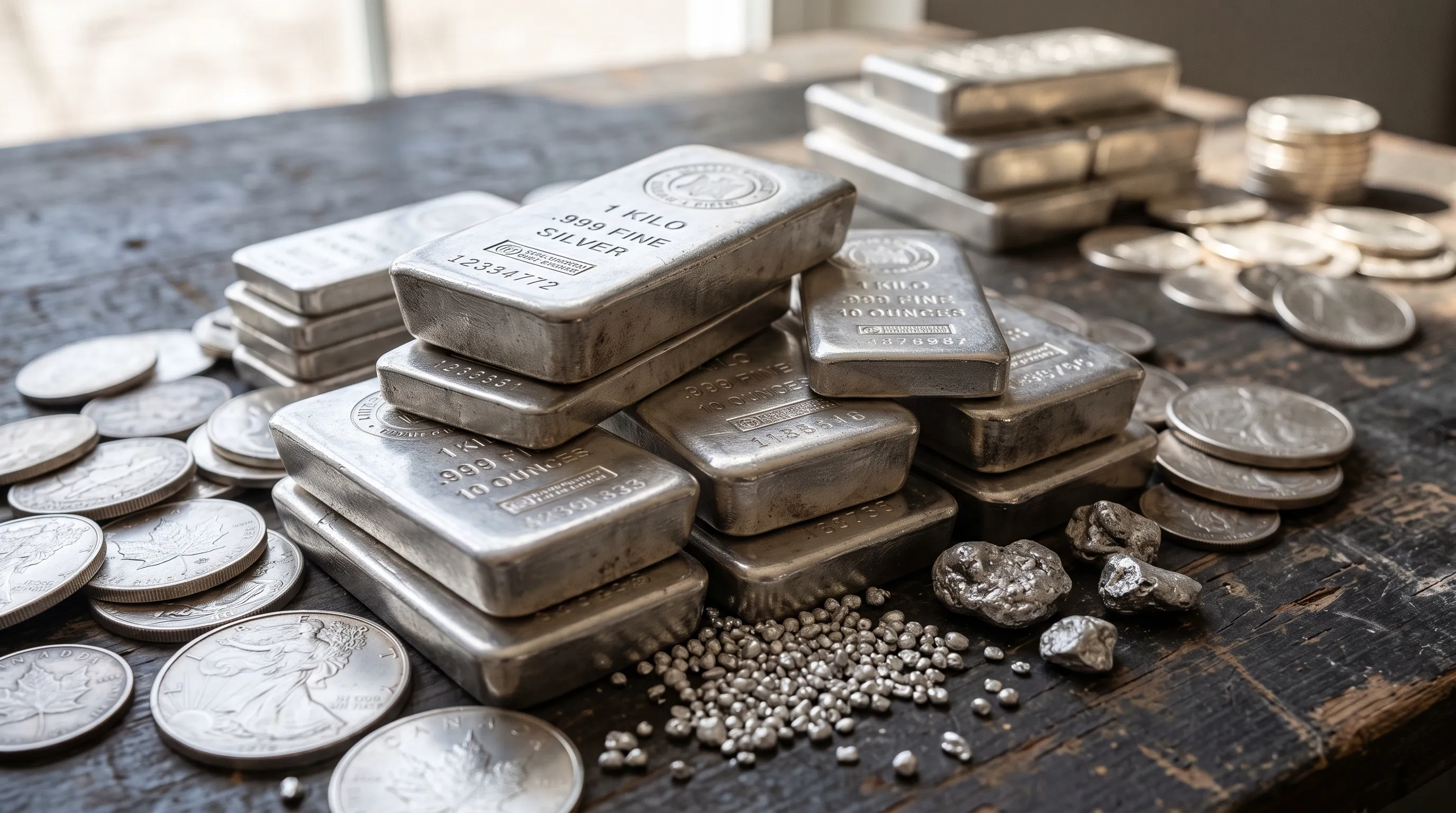
October 7, 2026 – Global spot silver prices experienced downward pressure during Wednesday trading, dropping below the critical 60 USD per troy ounce psychological threshold.
Spot silver traded near 59.75 USD per troy ounce during the midday session, representing a daily decline of approximately 2.42 percent.
For macroeconomic allocators, the precious and industrial metal remains caught in a volatile trading range as market participants actively reevaluate the near-term trajectory of Federal Reserve monetary policy.
Trading desks observe that while fading expectations of immediate interest rate hikes provide some underlying support, a resilient United States dollar continues to exert mechanical downward pressure on the commodity.
Monetary Policy and Yield Pressures
The primary headwind for silver valuations this week stems from the persistent strength of the broader United States dollar index and elevated Treasury yields.
As fixed-income yields remain elevated near multi-decade highs, the opportunity cost of holding non-yielding precious metals mechanically increases, prompting short-term capital rotation out of the commodity space.
However, quantitative analysts note that institutional sentiment remains highly sensitive to shifting macroeconomic probabilities.
Recent data has led traders to drastically reduce their expectations for an aggressive Federal Reserve rate hike in October, creating a durable valuation floor for silver prices just below 60 USD.
Physical Deficits and Structural Support
Beyond near-term monetary fluctuations, the long-term structural outlook for silver remains heavily anchored by widening physical supply deficits across global markets.
The Silver Institute projects that the fundamental market deficit will rise to 46.3 million ounces in 2026, driven by aggressive industrial consumption in the solar energy and electronics manufacturing sectors.
Asset managers emphasize that this severe supply and demand imbalance, combined with ongoing geopolitical instability across Eastern Europe and the Middle East, fundamentally limits substantial downside risk.
Commodity funds expect silver futures to maintain their current consolidation pattern until a definitive macroeconomic catalyst, such as a formal pivot in central bank policy, triggers a directional breakout.
Mentioned in this article
Read more
 Silver Pulls Back Below 67 USD as Wage-Driven Rate Hike Bets and Solar Demand Revisions Weigh on Momentum
September 6, 2026 – Spot silver (XAG/USD) faced renewed selling pressure this weekend, decisively pulling back below the 67 USD threshold to trade near 66.05 USD.The aggressive retracement follows a surprisingly resilient U.S. labor market…
Donia Saad•06 September Silver Rebounds Near 69.63 USD Amid Historic Mining Deficit and Solar Demand Drop
August 24, 2026 – Silver spot prices extended their August rally to trade near 69.63 USD per troy ounce, completely decoupling from traditional industrial demand narratives as a severe supply-side crunch takes center stage.The dramatic rebo…
Donia Saad•24 August Silver Prices Pause Near $65.25 Following Multi-Week Rally Driven by Industrial Deficits
August 18, 2026 – Spot silver traded slightly lower near $65.26 per ounce during Tuesday's session, undergoing minor profit-taking following a multi-week rally.The temporary pause comes after the metal logged strong consecutive gains to tou…
Donia Saad•18 August Silver Spot Prices Extend Rebound Above $65 as Softer Dollar and Rate-Hike Reluctance Spark Buyer Demand
August 17, 2026 – Spot silver carried its positive momentum into the new trading week, advancing over 1.5% to cross the $65.85 resistance zone.The white metal's ongoing recovery follows a sharp August rebound from previous lows, largely dri…
Donia Saad•17 August Silver Prices Today Hold Steady as Industrial Demand Offsets Interest Rate Concerns
July 29, 2026 – Silver prices today remained relatively stable as investors evaluated the Federal Reserve's policy outlook while continued industrial demand helped support the precious metal. Spot silver traded at approximately $57.40 per o…
Donia Saad•29 July