Financial Markets News & Live Economy Updates

Breaking financial news with the latest on stocks, currencies, commodities, crypto, and the global economy.

Bitcoin's Market Rotation Signals a New Phase for Crypto Investors

Bitcoin's Market Rotation Signals a New Phase for Crypto Investors

July 21, 2026 – Bitcoin remained near the $65,000 level after recovering from its late-June lows, with on-chain data suggesting that a significant shift is taking place beneath the surface of the cryptocurrency market. Rather than focusing only on price action, analysts are increasingly monitoring the transfer of Bitcoin supply from long-term holders to a new generation of buyers. Long-Term Holders Continue to Shape the Market According to market data, long-term Bitcoin holders have gradually been distributing portions of their holdings while new investors absorb supply entering the market. Historically, similar rotations have occurred during major transition periods in Bitcoin's market cycle, often signaling changes in market leadership rather than immediate directional moves in price. Market Focus Expands Beyond Geopolitics While geopolitical tensions and monetary policy expectations continue to affect broader financial markets, Bitcoin's recent behavior suggests investors are paying closer attention to structural supply dynamics. The cryptocurrency has remained relatively resilient despite fluctuations in risk appetite, with market participants balancing Federal Reserve expectations against improving long-term adoption trends. Supply Trends Could Matter More Than Price Swings Analysts note that Bitcoin's current phase may be less about short-term volatility and more about who controls available supply. As long-term holders gradually transfer coins to newer market participants, investors are watching whether demand remains strong enough to absorb supply without triggering a deeper correction. The outcome could help determine the next major direction for the cryptocurrency market.

Indonesia to Boost Asset Yields to Support Rupiah

Indonesia to Boost Asset Yields to Support Rupiah

​June 6, 2026 — Indonesia’s central bank and finance ministry have agreed to increase the attractiveness of returns on domestic financial assets in a coordinated effort to support the rupiah, which has recently fallen to record lows. The decision comes as policymakers seek to restore investor confidence and encourage renewed portfolio inflows into the country’s financial markets.Strategy to Attract Foreign InflowsAuthorities plan to improve yields on domestic instruments to make Indonesian assets more competitive for global investors.The move reflects growing concerns over sustained capital outflows, which have weighed on financial markets and contributed to pressure on the currency.Bond Market and Yield AdjustmentsAccording to the agreement, Bank Indonesia and the finance ministry will work together to ensure more attractive returns across government-related instruments and monetary tools.Recent market data showed yields on short-term central bank instruments (SRBI) at around 7.25%, compared with 6.902% on the 10-year government bond, highlighting efforts to manage investor demand and capital flows. Currency Under PressureThe rupiah has recently come under significant pressure, reaching historic lows amid broader concerns about fiscal policy direction, capital outflows, and global market uncertainty.Authorities have already intervened in both currency and bond markets to stabilize financial conditions while maintaining market confidence.Policy Aim: Restore StabilityOfficials emphasized that stronger coordination between monetary and fiscal authorities is intended to improve market sentiment and stabilize financial conditions.The broader goal is to strengthen capital inflows and reduce volatility in the foreign exchange market while supporting Indonesia’s financial resilience.

UA Finance06 June
Litecoin Drops 10% as Crypto Market Selloff Deepens

Litecoin Drops 10% as Crypto Market Selloff Deepens

​June 6, 2026 — Litecoin (LTC) fell more than 10% on Saturday, extending its recent downward trend as the broader cryptocurrency market experienced renewed selling pressure. According to the Investing.com index, Litecoin dropped to around $40.85, marking a significant one-day decline. Market Cap and Trading Range Weakens.The decline pushed Litecoin’s market capitalization lower, while trading activity reflected increased volatility across digital assets.During the session, Litecoin traded within a narrow intraday range before accelerating losses toward the downside.Broader Crypto Market Pressure.The wider cryptocurrency market also weakened, with major digital assets showing similar downward movement, not just Litecoin.Investor sentiment across crypto markets remained cautious amid ongoing volatility and reduced risk appetite.Weekly Performance Under Pressure.Litecoin also recorded notable losses over the past week, extending its bearish trend and reflecting broader weakness across the sector.The move highlights continued instability in cryptocurrency markets, where sharp price swings remain common during periods of heightened uncertainty.

UA Finance06 June
Cardano Drops 10% as Crypto Market Selloff Deepens

Cardano Drops 10% as Crypto Market Selloff Deepens

​June 6, 2026 — Cardano (ADA) fell more than 10% on Saturday, marking its largest one-day percentage decline since June 5 and extending losses across the cryptocurrency market. The token was trading at $0.1518 on the Investing.com Index at the time of the report. The decline pushed Cardano's market capitalization down to approximately $5.62 billion, representing about 0.27% of the total cryptocurrency market value. Weekly Losses Exceed 34%Cardano has remained under significant pressure over the past week, losing roughly 34.3% of its value during the seven-day period. Over the previous 24 hours, the cryptocurrency traded within a range of $0.1518 to $0.1623. Trading activity remained elevated, with approximately $1.03 billion worth of Cardano changing hands over the last 24 hours, accounting for about 0.62% of total cryptocurrency trading volume. ADA Remains Far Below Record HighDespite its prominence among digital assets, Cardano remains approximately 95.1% below its all-time high of $3.10, reached in September 2021. The recent selloff highlights the ongoing volatility across cryptocurrency markets, where prices have faced sustained pressure in recent sessions. Bitcoin and Ethereum Also RetreatThe broader cryptocurrency market also weakened, with Bitcoin trading at approximately $60,158.4, down 5.38% on the day, while Ethereum fell 11.75% to around $1,539.66. Bitcoin continued to dominate the market with a capitalization of about $1.22 trillion, while Ethereum's market value stood near $188.66 billion at the time of the report.

UA Finance06 June
BofA expects Bank of Canada to hold rates

BofA expects Bank of Canada to hold rates

​On Thursday, 04 June 2026, Bank of America said it expects the Bank of Canada to keep its benchmark interest rate unchanged at 2.25% at its upcoming June 10 meeting and maintain that policy stance through the end of 2026, as policymakers continue to balance weak economic growth against persistent external risks.The outlook signals a prolonged policy pause, reflecting cautious sentiment among policymakers as they monitor inflation trends, labor market conditions, and global economic uncertainty.Weak growth supports policy pauseBofA’s outlook is anchored in ongoing weakness in the Canadian economy, which limits the case for further tightening:• Economy has recorded two consecutive quarters of contraction• Labor market conditions remain soft• Negative output gap is helping contain core inflationAccording to the note, these factors reduce the likelihood of near-term rate hikes despite lingering inflation risks.Inflation risks still in focusWhile growth is weak, inflation risks have not fully faded, particularly due to external pressures:• Elevated oil prices may keep inflation sticky• Policy tone expected to remain cautious and data-dependent• Bank likely to emphasize flexibility in forward guidanceBofA expects the central bank to acknowledge that higher energy costs could complicate the inflation outlook in the coming months.Markets already pricing in prolonged pauseFinancial markets have recently adjusted expectations for interest rates:• Rate hike expectations have been scaled back• Yield curve has steepened in recent weeks• Market positioning supports a prolonged policy holdThe Bank of Canada’s next policy decision is scheduled for June 10, with investors watching closely for any shift in tone regarding inflation and growth risks.

UA Finance04 June
3D Systems shares fall after $50M stock offering

3D Systems shares fall after $50M stock offering

​​3D Systems shares fell sharply in premarket trading on Thursday, June 4, 2026, after the company priced an upsized follow-on stock offering, raising concerns over dilution and pressuring investor sentiment.The 3D printing company moved ahead with a larger-than-expected equity raise, increasing the size of the offering from its initial plan.Upsized equity offering pressures stockThe company completed a discounted share sale that weighed heavily on the stock price:• Sold approximately 16.4 million shares• Priced at $3.05 per share, a 15.5% discount to the previous close• Total offering size increased to $50 million from $40 million• Shares fell more than 14% in premarket trading, dropping below $3.10The move reflects investor concerns over dilution, as new shares increase supply and reduce existing ownership value.Funds to support operations and growthAccording to the company, proceeds from the offering will be used for general corporate purposes:• Capital expenditures• Working capital needs• Ongoing operational funding• Growth initiativesThe offering was led by Needham and Craig-Hallum as joint bookrunners.Stock performance contextDespite the sharp premarket decline, 3D Systems had seen strong recent performance:• Stock had gained around 92% during the current quarter prior to the drop• Total shares outstanding stand at approximately 146.9 millionThe correction highlights how quickly sentiment can shift when equity funding is used after a strong rally.

UA Finance04 June
Nasdaq futures drop after Broadcom earnings

Nasdaq futures drop after Broadcom earnings

​​Nasdaq futures declined on Thursday, June 4, 2026, after semiconductor giant Broadcom delivered a weaker-than-expected outlook that raised doubts over the sustainability of the artificial intelligence-driven rally in global equity markets.Broader U.S. equity futures showed a mixed performance, with Dow futures edging higher while S&P 500 futures slipped, as investors balanced tech-sector weakness against ongoing geopolitical uncertainty in the Middle East.Broadcom disappoints despite strong revenue growthBroadcom posted strong quarterly results but failed to meet elevated market expectations, triggering a sharp negative reaction in after-hours and premarket trading.• Revenue jumped 48% in Q2, driven by strong AI chip demand• Shares fell after guidance failed to deliver expected upside revisions• The company maintained its long-term 2027 AI revenue outlook above $100 billion• Investors reacted to the absence of a typical “beat-and-raise” outlookThe disappointment weighed on sentiment across the semiconductor sector, dragging peers including major chipmakers lower in premarket trading.Tech sector weakness spreads across marketsLosses in Broadcom spilled over into broader technology names, with pressure seen across the AI and semiconductor space as investors reassessed high valuations built during the recent rally.Market analysts noted that expectations had been extremely elevated following a strong earnings season across the sector, making any lack of upside momentum enough to trigger profit-taking.Geopolitical tensions keep markets cautiousMarkets also remained sensitive to developments in the Middle East, as investors monitored ongoing tensions alongside fragile diplomatic progress.• Renewed ceasefire agreement between Israel and Lebanon supported cautious optimism• Ongoing U.S.–Iran tensions continued to weigh on risk sentiment• Energy markets reacted with volatility amid uncertainty over regional stabilityThese developments added to investor caution, particularly in risk-sensitive assets such as technology stocks.Energy prices ease and yields softenOil prices moved lower during the session as geopolitical risk premiums eased slightly following diplomatic developments.• Brent crude fell around 1.5%• WTI crude dropped about 1.2%• U.S. Treasury yields eased modestly, reflecting softer risk sentimentDespite the pullback, energy prices remain elevated compared to pre-conflict levels, keeping inflation concerns in focus for markets.

UA Finance04 June
Amazon invests €10 billion in European fulfillment network

Amazon invests €10 billion in European fulfillment network

​Amazon commits €10 billion to expand European fulfillment networkAmazon announced on Thursday, June 4, 2026, a €10 billion ($11.6 billion) investment to expand and upgrade its European fulfillment network, alongside new AI-driven robotics designed to reshape warehouse operations.The initiative is part of the company’s broader push to enhance logistics efficiency and accelerate delivery capabilities across major European markets.AI-powered robotics reshape warehouse operationsAlongside the investment announcement, Amazon unveiled a new generation of robotics and automation tools aimed at improving warehouse productivity.• Introduced upgraded Proteus robot capable of responding to conversational instructions• Current Proteus model already operates across 25 U.S. sites in dock areas• New version will function across warehouse floors starting in 2027• Robots can transport loads of up to nearly 400 kgThe company said the new systems are designed to integrate more naturally with human workers, allowing employees to assign tasks through simple commands.Expansion of European logistics and delivery networkAmazon also outlined a significant expansion of its logistics footprint across Europe:• Launch of more than 25 sub-same-day delivery sites in 2026• Expansion of “Amazon Now” ultra-fast delivery service in the UK• Fresh grocery same-day delivery now active in over 2,300 U.S. cities• Planned rollout of faster delivery services in additional European citiesKey markets targeted include the United Kingdom and Germany, where demand for rapid delivery continues to grow.Long-term AI and automation strategyThe company also highlighted upcoming AI and automation developments:• STARK robotic system to roll out to 15 European sites by 2027• Vulcan robot introduces tactile sensing capabilities• Alexa+ AI assistant expected to expand to 10 additional countries in 2027Amazon previously projected capital expenditures to exceed $200 billion this year, reflecting continued heavy investment in infrastructure and technology.

UA Finance04 June
Natural gas prices rise into Q3 on strong demand

Natural gas prices rise into Q3 on strong demand

​U.S. natural gas prices are expected to extend their recent recovery into the third quarter of 2026, supported by stronger LNG export demand and rising power sector consumption. However, Morgan Stanley warned that the longer-term outlook for 2027 is turning less supportive due to growing oversupply risks.Henry Hub, the U.S. benchmark, remained below $3 per million British thermal units for much of May amid mild weather and weaker LNG demand. Prices have since recovered above the $3 level as market conditions begin to tighten.Short-term outlook supported by demandMorgan Stanley expects continued strength in the near term, driven by seasonal demand recovery and improving fundamentals across key consumption sectors.• Henry Hub expected to average $3.50/MMBtu in Q3 2026​• Forecast rises to $3.75/MMBtu in Q4 2026• Full-year 2026 average revised slightly lower to $3.40/MMBtu (from $3.55)The bank said the outlook is supported by the end of seasonal maintenance at major LNG facilities, including Corpus Christi, Cameron, and Golden Pass, alongside stronger summer power demand.Supply trends show gradual recoveryOn the supply side, U.S. natural gas production has shown mixed performance in recent months.• Output averaged 107.3 bcf/d in May• Production fell by 1.2 bcf/d month-on-month due to pipeline maintenance• Early June data suggests a gradual recovery in supplyMorgan Stanley expects total U.S. gas production to grow by around 3 bcf/d in 2026, driven by increased drilling activity, particularly in the Permian Basin.2027 outlook turns more cautiousDespite near-term strength, the outlook for 2027 appears weaker as supply growth begins to outpace demand.Key risks include:• Rising Permian rig counts following stronger oil prices• Expanding associated gas production• More than 4 bcf/d of new pipeline capacity expected in the Permian regionMorgan Stanley strategist Devin McDermott noted that while near-term conditions are slightly more constructive than consensus, the market could face increasing oversupply pressure heading into 2027.Storage levels and market balanceStorage forecasts were also revised slightly higher, pointing to a looser balance in the medium term.• End-October 2026 storage estimated at 3.81 Tcf• Around 1% above the five-year average• End-October 2027 storage projected at 3.95 Tcf• Roughly 4% above normal levelsOverall, the report suggests a market transitioning from short-term tightening conditions toward a more balanced-to-loose structure in the longer term as supply growth gradually overtakes demand.

UA Finance04 June
Australia Trade Surplus Rebounds Sharply in April

Australia Trade Surplus Rebounds Sharply in April

​​Australia’s trade balance recorded a strong rebound in April 2026, supported by a significant increase in commodity exports, particularly iron ore, minerals, and coal. According to data released by the Australian Bureau of Statistics on Thursday, June 4, 2026, the improvement in export performance offset a modest rise in imports driven by higher fuel costs.The stronger-than-expected trade figures highlight continued global demand for Australian resources, even as domestic economic conditions show signs of moderation.Trade Balance Turns to SurplusAustralia’s trade balance recorded a strong rebound in April 2026, supported by a significant increase in commodity exports, particularly iron ore, minerals, and coal. According to data released by the Australian Bureau of Statistics on Thursday, June 4, 2026, the improvement in export performance offset a modest rise in imports driven by higher fuel costs.Australia’s goods trade position improved sharply in April, exceeding market expectations:· Trade surplus reached A$1.79 billion ($1.28 billion) in April · This compares with a revised A$1.02 billion deficit in March · Economists had expected a surplus of around A$1.23 billion · Exports rose 7.2% month-on-month, the strongest increase in nearly a year Export Growth Driven by CommoditiesThe rise in exports was mainly supported by strong performance in the mining sector:· Metal ores and minerals increased by 18.5% · Coal exports rose by 15.2% · Iron ore shipments to China recorded strong growth · Coal exports to South Korea, India, and the Netherlands also increased These gains reflect sustained global demand for industrial commodities across key Asian and international markets.Imports and Energy CostsImports saw a modest increase during April, mainly due to higher energy prices:· Imports rose 0.8% after a sharp increase in March · Fuel and lubricant imports jumped 41.4% · Higher global energy prices lifted the value of petroleum-related imports Currency and Policy ContextThe Australian dollar showed little movement following the release, trading around 0.7131 against the U.S. dollar, as markets focused on broader monetary policy expectations.The data comes as the Reserve Bank of Australia continues its tightening cycle, having raised interest rates by 25 basis points to 4.35% in May, marking its third consecutive hike aimed at controlling inflation pressures.

UA Finance04 June
Dollar holds near 2-month high on jobs data

Dollar holds near 2-month high on jobs data

​The U.S. dollar held steady near a two-month high on Thursday, June 4, 2026, supported by ongoing Middle East tensions and expectations that the Federal Reserve will keep interest rates higher for longer. The Dollar Index remained close to recent peaks during Asian trading hours, reflecting steady demand for the greenback amid cautious global sentiment.Geopolitical Developments and Safe-Haven DemandThe dollar remained supported by heightened geopolitical uncertainty in the Middle East:· Washington confirmed an Israel-Lebanon ceasefire agreement, though conditional on reduced hostilities · Reports of Iranian missile strikes on Kuwait and Bahrain added to market caution · U.S. military strikes near Iran’s Qeshm Island further increased tensions · Uncertainty around the Strait of Hormuz continued to support safe-haven demand for the dollar U.S. Economic Data and Fed ExpectationsStronger-than-expected economic indicators reinforced expectations of prolonged restrictive monetary policy:· ADP data showed 122,000 jobs added in May · ISM services index rose to 54.5 in May from 53.6 in April · ISM prices-paid component climbed to its highest level in nearly four years · Markets scaled back expectations for near-term Federal Reserve rate cuts Investors are now focused on upcoming U.S. nonfarm payrolls data for further policy signals.Yen Remains Under PressureThe Japanese yen continued to trade weak against the U.S. dollar, with USD/JPY hovering near the psychologically important 160 level at around 159.97 yen. Markets remain on alert for possible intervention from Japanese authorities as the currency approaches key thresholds.· USD/JPY traded near 159.97 yen, close to 160 level · Risk of intervention from Japanese policymakers remains elevated · Wide yield differentials between the U.S. and Japan continue to pressure the yen · Seasonal weakness in June adds additional downside pressureThe dollar’s resilience highlights the current dominance of safe-haven flows in global markets, with geopolitical risk and strong U.S. data continuing to reinforce its position despite growing volatility in other asset classes.

UA Finance04 June
Gold rises after ceasefire as US jobs data awaited

Gold rises after ceasefire as US jobs data awaited

​​Gold prices rose on Thursday, 04 June 2026, recovering from the previous session’s losses as markets reacted to easing geopolitical tensions in the Middle East following a tentative ceasefire agreement between Israel and Lebanon. At the same time, investors shifted their attention toward upcoming U.S. labor market data for clearer signals on the Federal Reserve’s interest rate outlook.The metal’s rebound came after a sharp decline in the prior session, which was driven by a stronger U.S. dollar and concerns over higher-for-longer interest rates. Despite the recovery, sentiment remained cautious as traders weighed fragile geopolitical conditions against persistent macroeconomic pressure.Gold rebounds after mid-week lossesGold managed to recover part of its recent decline as risk sentiment stabilized slightly following developments in the Middle East.• Spot gold rose 0.9% to $4,476.07 per ounce• U.S. gold futures climbed 0.8% to $4,502.84 per ounce• Prices had previously fallen more than 1% in the prior sessionThe rebound was supported by easing concerns over immediate energy-driven inflation risks, although broader uncertainty remained intact.Geopolitical tensions keep markets cautiousMarkets continued to monitor fragile developments in the Middle East despite the announcement of a ceasefire framework between Israel and Lebanon. The agreement remains conditional on a reduction in hostilities, leaving investors wary about its durability.At the same time, reports of renewed military activity across parts of the region, including strikes in the Gulf, kept overall risk sentiment subdued and supported demand for safe-haven assets such as gold.US data outlook shapes market directionAttention has now shifted toward key U.S. economic indicators, particularly the upcoming nonfarm payrolls report, which is expected to guide expectations around Federal Reserve policy.Recent data added to the cautious tone in markets, with stronger-than-expected job growth and elevated services-sector inflation reinforcing the view that interest rates may remain higher for longer. This typically weighs on non-yielding assets such as gold, limiting further upside momentum.Other metals show mixed performancePrecious and industrial metals recorded mixed movements during the session amid shifting risk appetite and macroeconomic uncertainty.• Silver rose 0.9% to $73.41 per ounce• Platinum gained 1.3% to $1,884.60 per ounce• Copper and other base metals edged lower on weaker sentimentBroader commodity markets also reflected caution, as investors balanced easing geopolitical pressure against concerns over global growth and monetary policy direction.

UA Finance04 June
Oil prices fall after Israel-Lebanon ceasefire

Oil prices fall after Israel-Lebanon ceasefire

​Global oil prices eased on Thursday, June 4, 2026, following the announcement of a ceasefire agreement between Israel and Lebanon, which helped cool geopolitical tensions in the Middle East and shifted investor sentiment toward expectations of broader regional de-escalation.The agreement, announced late on Wednesday, came after a period of heightened volatility in energy markets, where prices had previously surged on renewed conflict risks, including attacks in the region and military activity near strategic shipping routes such as the Strait of Hormuz.Ceasefire Developments and Geopolitical ContextThe Israel-Lebanon ceasefire has raised cautious optimism in markets over the possibility of wider diplomatic progress involving the United States and Iran. However, traders remain cautious as the situation continues to evolve.· The ceasefire between Israel and Lebanon was announced late Wednesday · Previous session saw oil prices rise about 2% amid renewed tensions · Earlier escalation included reported strikes and attacks in the Middle East region · Markets are watching potential negotiations involving Washington and Tehran Crude Oil PricesOil benchmarks declined during Thursday’s session, according to market data:· Brent crude futures fell $0.77 (0.8%) to $97.03 per barrel · U.S. West Texas Intermediate (WTI) crude dropped $0.70 (0.7%) to $95.32 per barrel · Trading activity remained cautious despite the price decline Supply and Demand FactorsMarket participants also monitored supply and demand signals alongside geopolitical developments.· U.S. crude inventories fell by 8 million barrels to 433.7 million barrels · Analysts had expected a smaller decline of around 4 million barrels · Slowing demand from China continued to weigh on longer-term price expectations · Price discounts in some crude grades reflected weaker Asian demand trends Market Outlook ContextDespite the decline, market sentiment remained sensitive to geopolitical risks, particularly around shipping routes and potential disruptions in global oil flows. Analysts noted that supply constraints and regional instability continue to play a key role in price movements.

UA Finance04 June
Bitcoin drops to 4-month low at $61K

Bitcoin drops to 4-month low at $61K

​Bitcoin declined sharply on Thursday, June 4, 2026, hitting a near four-month low as global cryptocurrency markets came under pressure from escalating geopolitical tensions in the Middle East and sustained institutional outflows from Bitcoin exchange-traded funds (ETFs). The move reflects a broader shift in investor appetite away from risk assets toward safer and higher-growth sectors.Market sentiment remained weak as investors continued to reassess exposure to digital assets amid macroeconomic uncertainty and increasing volatility across global financial markets.Bitcoin Price PerformanceBitcoin recorded significant losses during the session before partially recovering:· Bitcoin fell to $61,442.7, its lowest level in nearly four months · It later recovered to trade around $63,832.4 · The asset remains approximately 50% below its October record high ETF Outflows and Institutional PressureA major driver of the decline was continued institutional selling through spot Bitcoin ETFs:· Bitcoin ETFs recorded $396 million in outflows on Wednesday · This followed approximately $1.02 billion in outflows earlier in the week · Total outflows reached $3.7 billion over the past three weeks These flows reflect a broader reduction in institutional exposure to crypto assets amid heightened risk aversion.Geopolitical and Macro DriversBroader macroeconomic and geopolitical conditions also weighed on crypto markets:· Escalating U.S.-Iran tensions increased overall market risk aversion · Investors moved toward the U.S. dollar as a safe-haven asset · Expectations of prolonged conflict contributed to inflation-related concerns Market participants also noted that uncertainty around peace negotiations continues to pressure sentiment in risk-sensitive assets.Altcoins Extend LossesThe weakness extended across the wider cryptocurrency market:· Ether (ETH) fell 4.6% to $1,785.40 · XRP declined 4.1% to $1.1882 · Solana, Cardano, and BNB dropped between 5% and 9% · Dogecoin fell 4%, while $TRUMP declined 7.8% Market Rotation Toward AI StocksAnalysts also pointed to a continued shift in capital flows from crypto assets into AI-related equities. The move reflects growing investor preference for technology stocks with stronger perceived fundamentals and clearer growth prospects, while adding further pressure on non-yielding digital assets.

UA Finance03 June
OECD Cuts Global Growth Outlook Amid Iran Conflict Risks

OECD Cuts Global Growth Outlook Amid Iran Conflict Risks

​June 3, 2026 — The OECD has revised its global economic outlook downward, warning that continued geopolitical tensions—particularly related to the conflict involving Iran—are weighing on global growth and increasing uncertainty for the world economy.The organization emphasized that while the global economy has remained relatively resilient, rising energy costs and supply disruptions linked to geopolitical instability are weakening momentum.Iran Conflict Raises Downside RisksAccording to the OECD, the duration and intensity of the Middle East conflict remain a key factor shaping global economic performance.A prolonged disruption could significantly deepen economic damage through:· Higher energy prices· Supply chain disruptions· Increased inflationary pressure· Reduced global trade flowsThe OECD warned that the longer the conflict persists, the greater the risk of sustained global economic slowdown.Baseline Growth Forecast LoweredIn its updated outlook, the OECD projects global growth to slow from 3.4% in 2025 to 2.8% in 2026, before recovering slightly to 3.1% in 2027 under its baseline scenario.However, the organization stressed that this projection depends heavily on geopolitical stability and energy market conditions.Downside Scenario: Deeper Economic DamageUnder a prolonged disruption scenario, the OECD warns that global growth could fall significantly lower than baseline projections, with sharper inflationary pressures and increased risk of recession in some economies.Emerging markets are expected to be among the most vulnerable due to their reliance on energy imports and weaker economic buffers.Inflation and Policy ChallengesThe OECD also highlighted that rising energy prices may keep inflation elevated for longer, potentially forcing central banks to maintain tighter monetary policy.This could further slow investment and consumer spending, adding pressure to already fragile growth conditions.Key TakeawayThe OECD outlook underscores a fragile global recovery, where economic performance increasingly depends on geopolitical developments, especially in the Middle East. Persistent conflict risks could significantly worsen growth and inflation dynamics worldwide.

UA Finance03 June
Goldman Sachs Reaffirms Buy Ratings on Nordic Telecom Stocks

Goldman Sachs Reaffirms Buy Ratings on Nordic Telecom Stocks

​June 3, 2026 — Goldman Sachs has reaffirmed its positive outlook on the Nordic telecom sector, maintaining Buy ratings on Telia Company, Telenor, and Tele2. The bank highlighted improving market discipline in Sweden as a key driver supporting pricing power and long-term earnings growth across the industry.Sweden Telecom Market Shows Structural ImprovementGoldman Sachs pointed to ongoing structural improvements in the Swedish telecom market, including reduced competitive intensity and a more rational pricing environment. These factors are expected to enhance profitability and support more stable earnings trajectories for major regional operators.The bank also noted that potential industry consolidation remains an important long-term catalyst, with effects expected to extend through the end of the decade.Telia Company: Strong Pricing Power and Growth OutlookGoldman Sachs reiterated its buy rating on Telia Company, citing strategic decisions that reinforce its market positioning. In particular, the decision to discontinue its Halebop mid-market brand was seen as supportive of stronger pricing discipline in Sweden.The firm set a 12-month target price of SEK 59, implying around 20% upside, and expects Telia to deliver approximately 6% annual EBITDA growth through 2029, driven by cost efficiency measures and potential consolidation benefits.Telia has also announced the acquisition of Telness, a mobile virtual network operator, from Nordic Communications Group, alongside a long-term agreement involving the Seamless OS platform.Telenor: Benefiting from Market DisciplineGoldman Sachs maintained its Buy rating on Telenor, stating that improving market conditions in Sweden are likely to benefit all major operators.The bank emphasized that consolidation in the Swedish telecom sector remains a key long-term catalyst. Telenor is viewed as well positioned to benefit from stronger pricing trends and a more disciplined competitive environment.Recently, Telenor agreed with Verdane to establish joint ownership of its IoT unit, Telenor Connexion, in a deal valued at SEK 7.5 billion, with SEK 3.8 billion in cash proceeds going to Telenor.Tele2: Inflation-Linked Growth and Stable Pricing PowerGoldman Sachs also reiterated its buy recommendation on Tele2, highlighting the company’s ability to benefit from sustained pricing power and inflation-linked tariff adjustments in Sweden.The brokerage expects Tele2 to participate in broader sector earnings growth, supported by improved market structure and reduced competitive pressure across the Nordic telecom industry.OutlookOverall, Goldman Sachs remains constructive on the Nordic telecom sector, citing stronger pricing dynamics, improved market discipline in Sweden, and consolidation potential as key long-term drivers. Telia Company, Telenor, and Tele2 remain the bank’s top picks in the sector.

UA Finance03 June

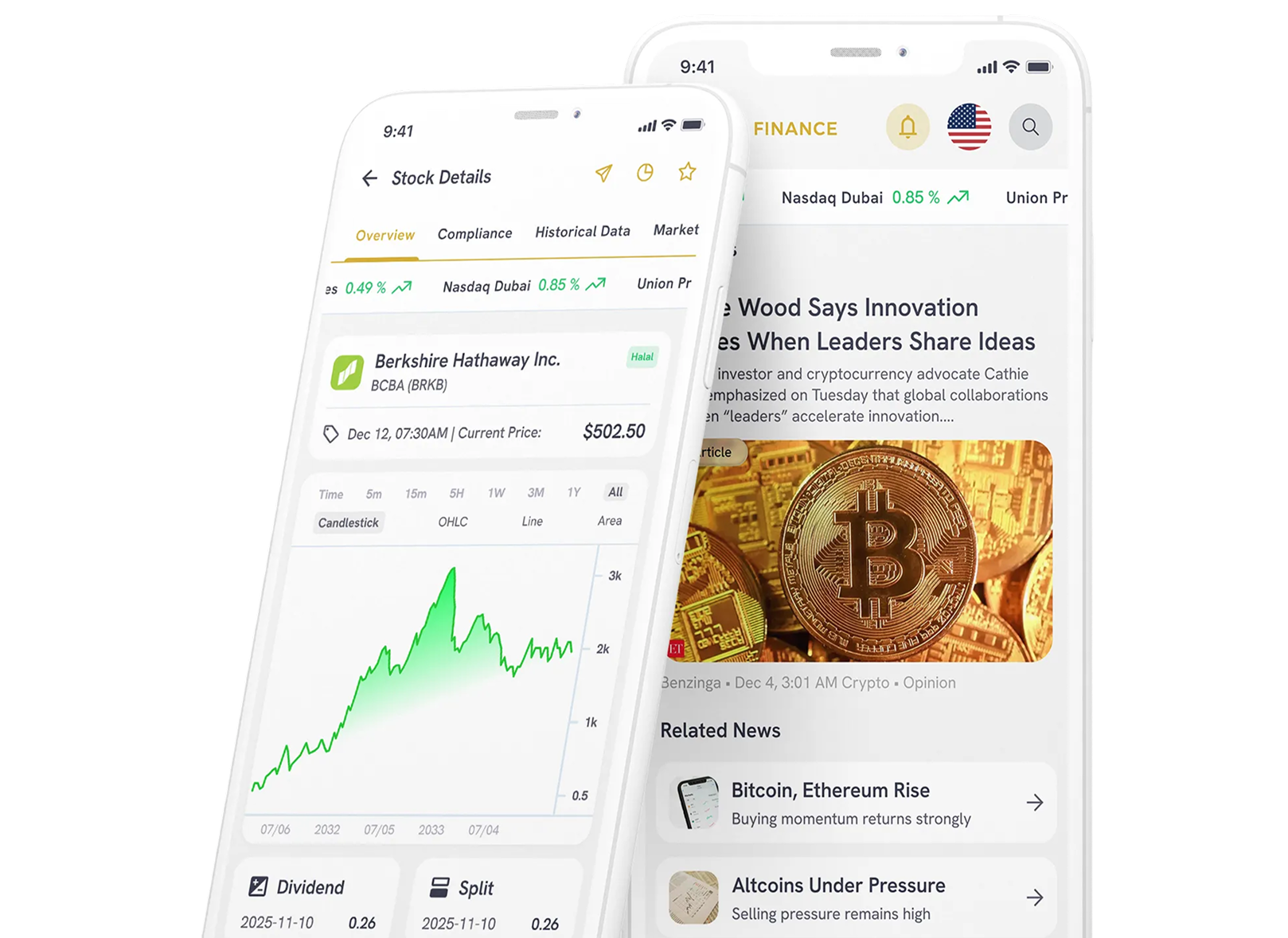
Track Global Markets in Real Time with UA Finance

Download the app now and access live financial data, expert analysis, and trusted economic news to follow stocks, forex, gold, and cryptocurrencies with ease.