

Prabowo Says Indonesia Could Breach Deficit Cap Only in Crisis


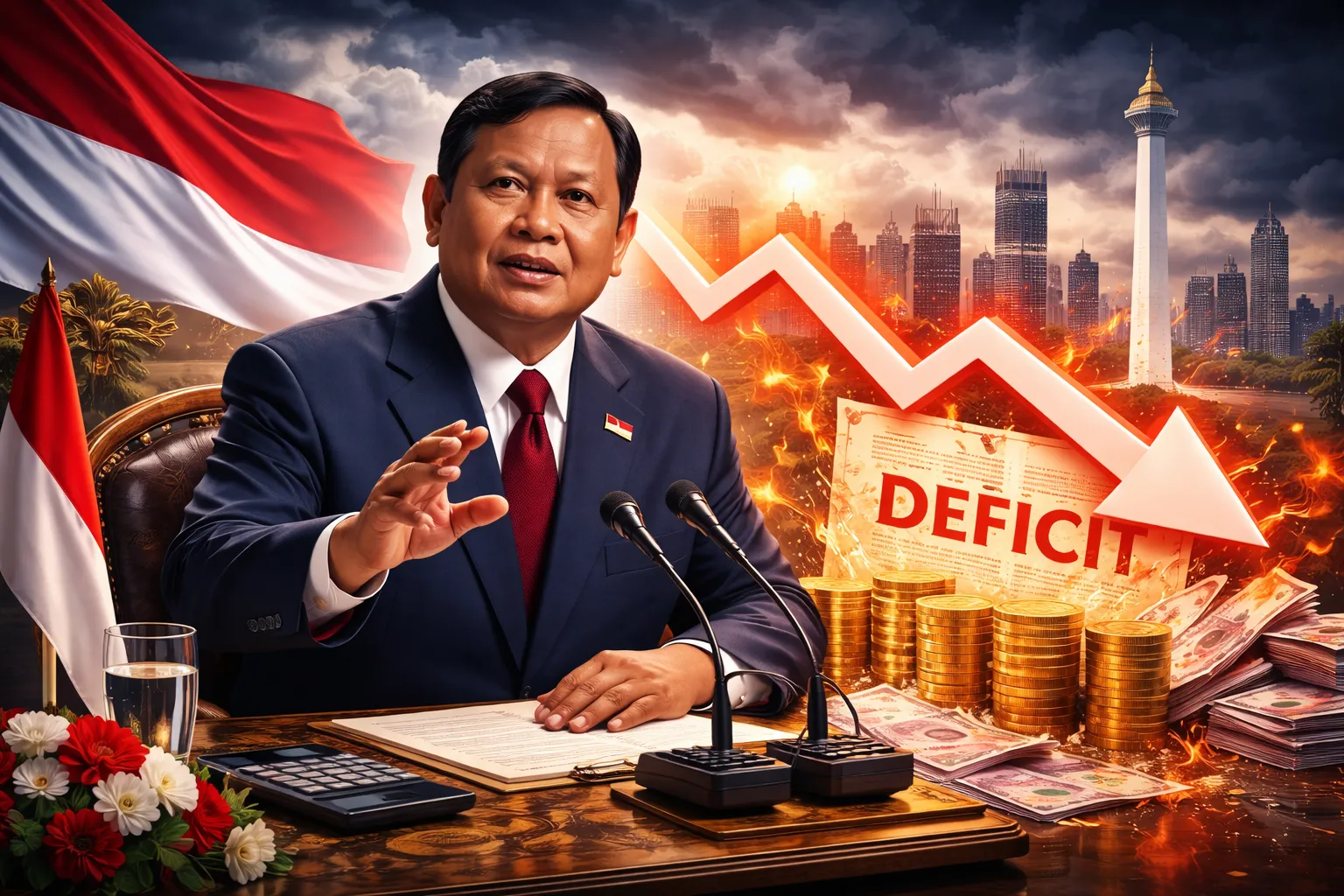
Indonesia on Sunday, March 15, 2026, showed signs of flexibility in its financial stance as the Southeast Asian nation's President Prabowo Subianto indicated that the government may exceed the budget deficit limit only during an economic crisis.
The statement comes at a time when Southeast Asia's largest economy is under pressure due to the rising oil prices.
Indonesia Keeps Fiscal Discipline, Leaves Room for Crisis Response
The Indonesian government is reaffirming its commitment to fiscal discipline while acknowledging the need to maintain flexibility in response to major economic disruptions. In the statement, President Prabowo stated that the government would only consider breaking the legal budget deficit ceiling of 3% of GDP in extraordinary circumstances, such as a prolonged energy crisis caused by a geopolitical conflict or global crisis.
This move is reminiscent of the government’s response to the pandemic when the budget deficit even briefly exceeded the legal ceiling to support the economy.
Why This Matters?
Indonesia’s strict 3% deficit ceiling has been a significant indicator of its commitment to fiscal discipline for investors worldwide and has helped maintain economic stability.
Any room for maneuver—particularly in the event of an energy or economic crisis—could have implications for market sentiment and the government’s ability to support the economy. Here are key points:
· Indonesia’s Fiscal Rule Is a Key Credibility Anchor: Indonesia has long had a 3% deficit rule. The rule is important to reassure investors. Breaking it, even temporarily, signals an idea of the potential seriousness of economic shocks.
· Oil prices are creating budget pressure: The increase in energy prices due to tensions in the Middle East is adding to expenditure on energy subsidies, which is putting pressure on the government to take contingency measures.
· The Government Wants to Preserve Investor Confidence: The authorities emphasized that any violation would be short-term and would be due to a crisis, and that it is not their intention to tarnish Indonesia’s reputation as a country with a disciplined fiscal policy.
· Credit Rating Agencies Are Already Watching: Major rating agencies have stated that fiscal loosening and policy uncertainty could negatively impact Indonesia’s credit rating and investor sentiment.
· Social spending is increasing: Large social spending initiatives, including food programs and subsidies, are increasing budget allocations as the government pursues its growth and social welfare agenda.
· Global Energy Shocks Could Force Policy Adjustments: If oil prices persist at higher levels, Indonesia may need emergency fiscal measures similar to those deployed during the pandemic to support the economy.
Fiscal Flexibility Without Losing Discipline
The Indonesian government is seeking a balance between maintaining the country’s fiscal discipline and bracing for global economic shocks. Despite the government’s commitment to the 3% deficit rule, policymakers are hinting at the need to provide a measure of flexibility to the rule to shield the country from extraordinary crises such as energy shocks.