

Luxury Brands Face Q1 Hit as Middle East Travel Retail Shuts


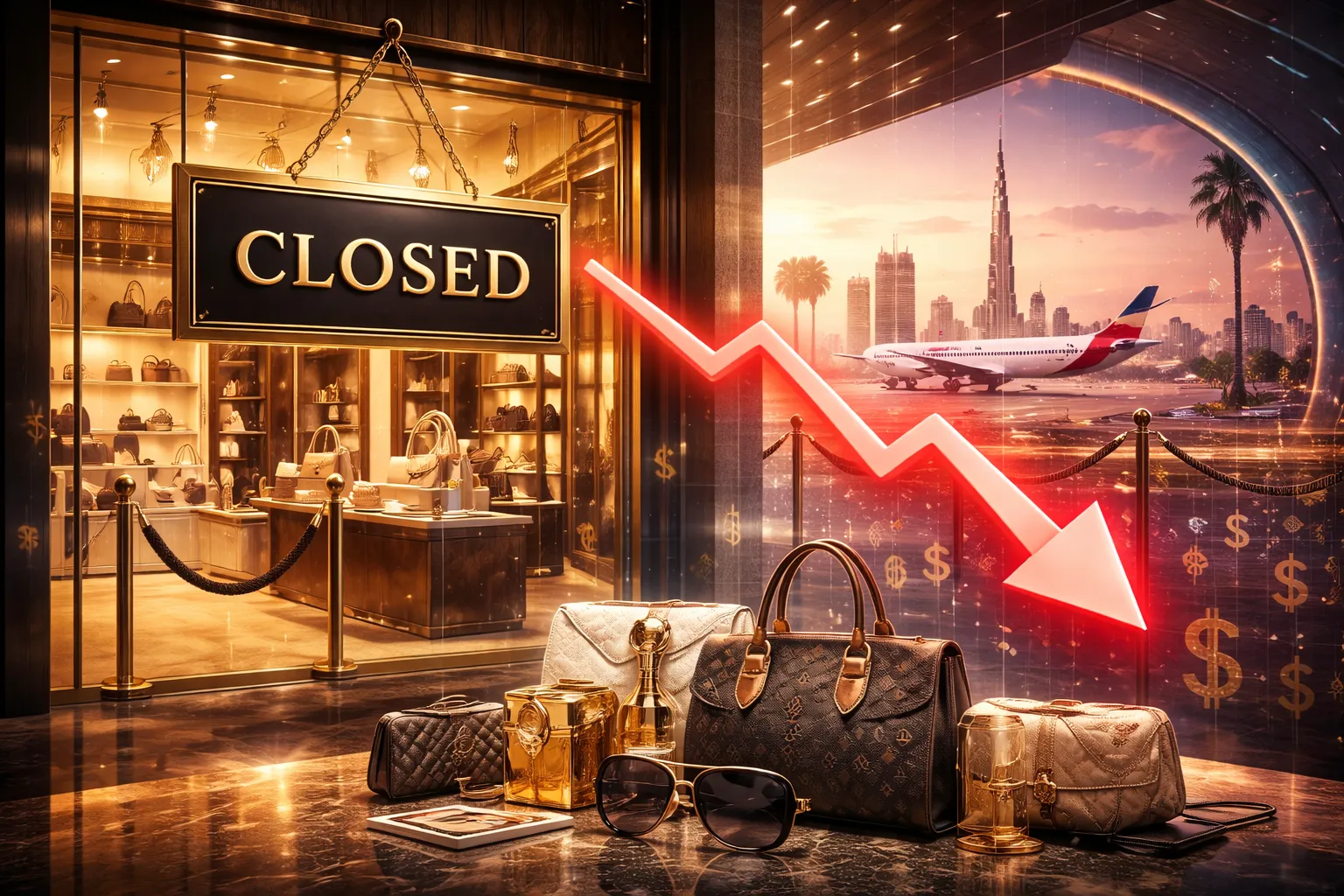
Global luxury brands are preparing for a modest first-quarter sales slowdown as airport retailing in parts of the Middle East continues to be affected by rising regional tensions.
On Sunday, March 15, 2026, travel retailing closures are anticipated to result in a 1% decline in total sector sales, demonstrating the importance of the region to luxury brands worldwide.
Middle East Travel Disruptions Pressure Global Luxury Sales
Major luxury companies, including top European fashion brands, are experiencing a temporary impact on their first-quarter performance due to a decline in travel retail and tourism in the Middle East. Analysts have estimated that the disruptions will negatively impact sales in the region by 1% in Q1.
It is due to the shutdown of travel retail channels in key hubs in the region. Airport retail stores are a major sales driver for luxury brands, particularly in key hubs such as Dubai and Doha, which experience a large number of international travelers. However, due to the conflict, the airspace has been shut down, thereby affecting travel retail.
Why This Matters?
Global luxury brands have a strong dependence on travel retail and tourism, particularly in regions that have traditionally been strong spenders, such as the Gulf region.
Therefore, the impact of airspace closures and reduced tourism could have significant repercussions for luxury sales, although the actual exposure in the region may be limited. Here are key factors:
· Travel Retail Is a Key Luxury Sales Channel: Luxury goods companies derive substantial revenue from airport shops and other travel-retail stores that rely on the volume of cross-border travel.
· The Middle East Is a Fast-Growing Luxury Market: It represents between 5% and 10% of the world's luxury expenditure and thus forms part of the most dynamic growth areas in the sector.
· Air Space Closures Are Affecting Tourism: Conflicts in different regions have led to the closure of major air corridors and airports, affecting the flow of tourists.
· Store closures are affecting major brand: Luxury groups such as LVMH, Kering, and Richemont have temporarily closed or reduced operations in parts of the Gulf during the conflict.
· Tourism Spending Is Falling Sharply: The regional tourism sector is losing hundreds of millions of dollars every day as tourists cancel their trips and flights are being rerouted.
· Luxury Stocks Are Sensitive to Geopolitical Risks: Small disruptions in travel retail can impact earnings estimates for luxury goods, influencing the sentiment of European equity markets.
Luxury Demand to Face a Temporary Shock
The projected Q1 slowdown points to the high correlation between global mobility, geopolitical stability, and luxury demand. While the ME region only accounts for a small percentage of overall luxury revenues, it is a critical travel retail market. Hence, any prolonged disruption may impact the short-term growth prospects of the sector.