
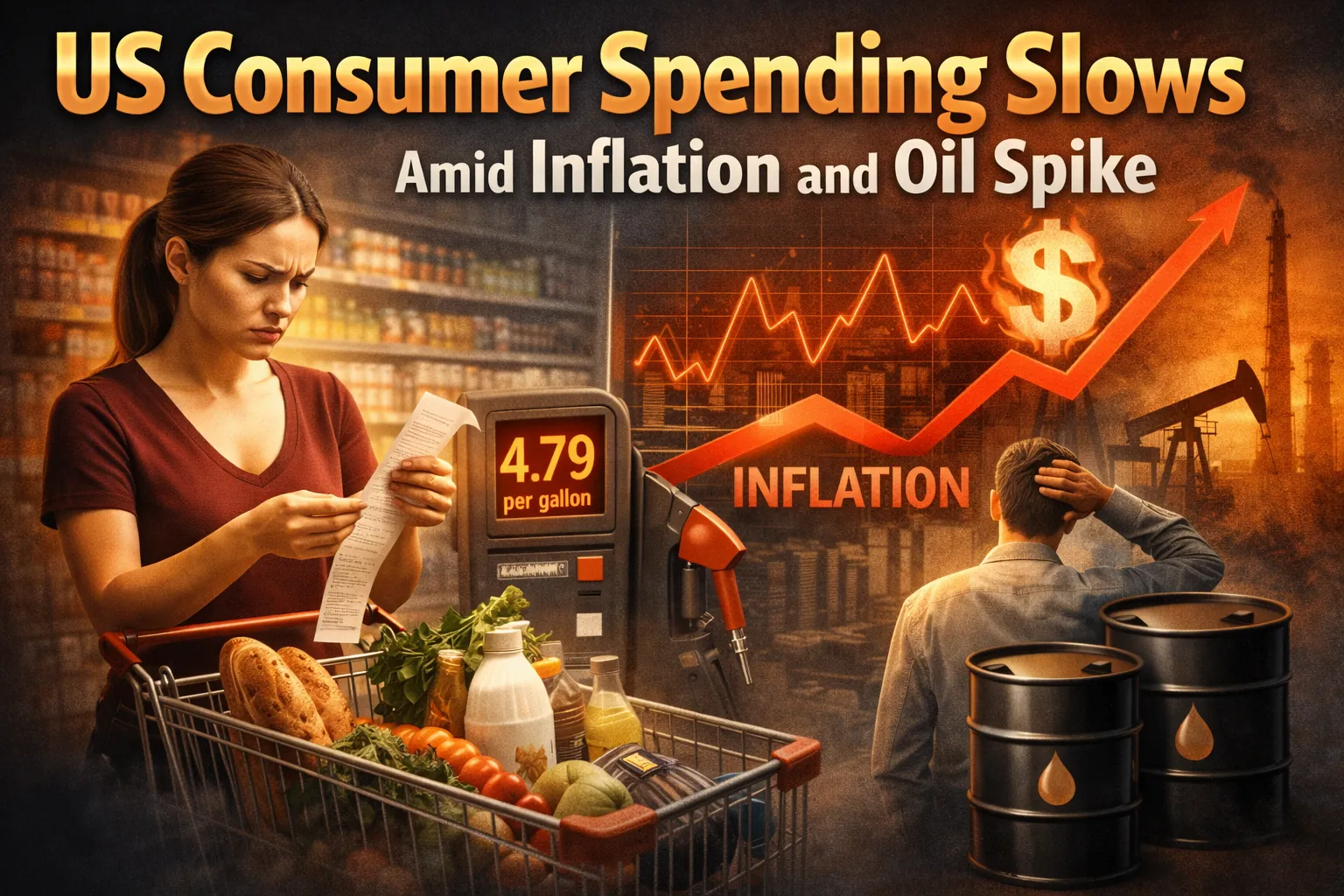
US Consumer Spending Slows Amid Inflation and Oil Spike


March 14 2026, investing.com
U.S. consumer spending barely increased in January, reflecting weaker-than-expected economic momentum at the start of 2026. Rising energy costs and heightened uncertainty from the Middle East conflict have added pressure on households, even as wage gains and tax refunds offer some financial support. Economists are watching how these factors may influence inflation, interest rates, and overall consumer behavior in the coming months.
Consumer spending and income trends
· Goods spending: Pullback after holiday season
· Services spending: Continued on essentials such as health care, housing, and insurance
· Income: Up slightly due to wages and Social Security cost-of-living adjustments
· Savings rate: Jumped the most in a year, suggesting households are tucking away extra income
Tax refunds and firm wages may lend support to spending, but higher energy prices, limited hiring, and inflation concerns could constrain growth. Economists warn that sustained oil prices above $83 per barrel could offset gains from refunds.
Michigan Consumer Sentiment
The University of Michigan Consumer Sentiment Index dipped slightly to 55.5 in March, compared to 56.6 last month, but surpassed forecasts of 55.0, indicating a cautiously optimistic consumer outlook.
| Measure | Latest Reading | Previous | Forecast |
| Consumer Sentiment Index | 55.5 | 56.6 | 55.0 |
| Consumer Spending (MoM, inflation-adjusted) | +0.1% | – | – |
| Core PCE Inflation (Jan) | +0.4% | – | – |
The index reflects consumer perceptions of current and future economic conditions and is a key barometer for policymakers and investors.
Market impact
· S&P 500 reversed early gains
· Two-year Treasury yields declined
· Higher consumer confidence may support the U.S. dollar despite broader uncertainties
Consumer spending showed only modest growth in January, with households balancing essential spending and rising savings amid inflationary pressures. While tax refunds and wage gains provide temporary relief, energy costs and geopolitical tensions could weigh on future consumption. The key question remains: will consumers maintain cautious optimism, or will inflation and uncertainty curb spending in the months ahead?