

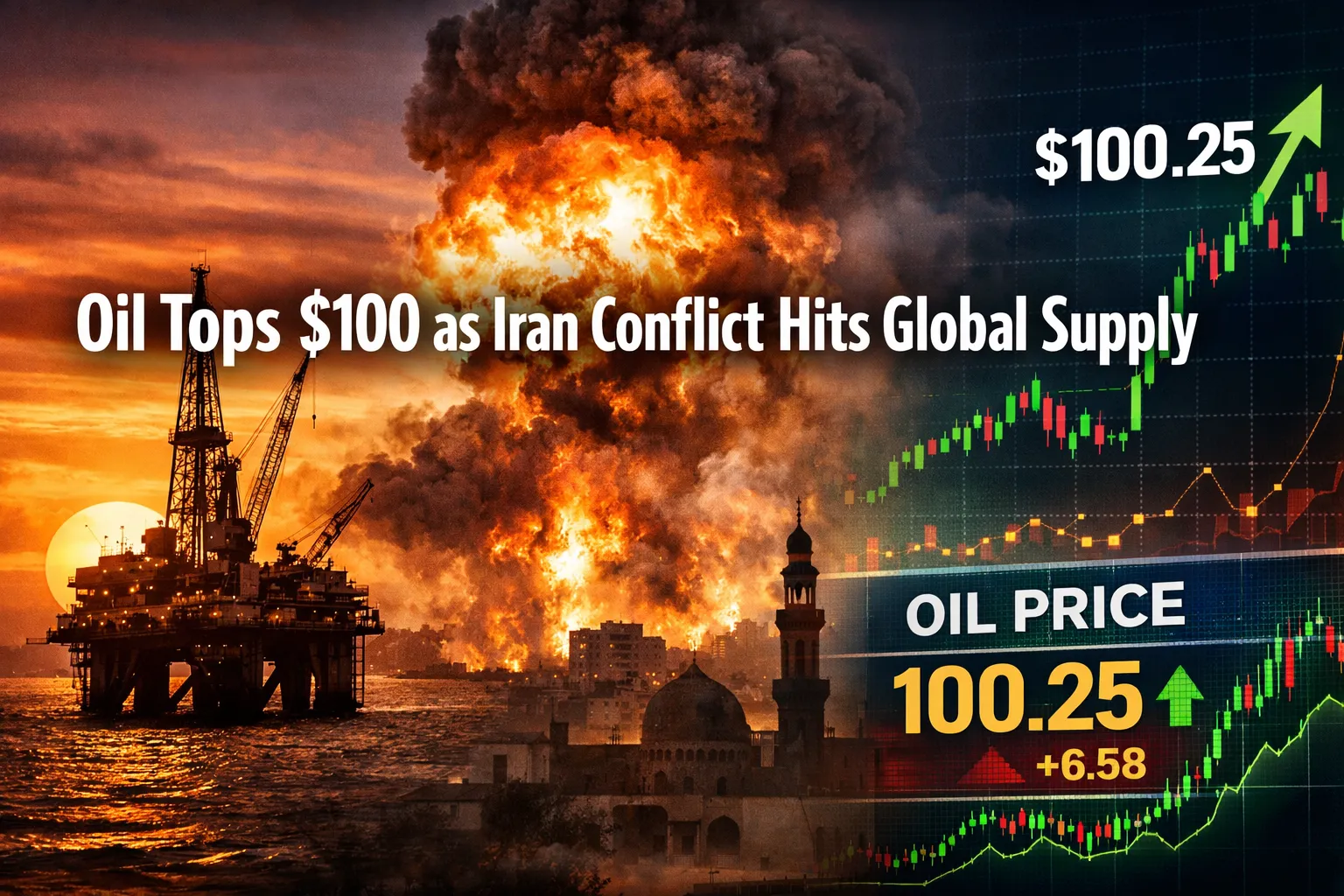
Oil Tops $100 as Iran Conflict Hits Global Supply


March 14 2026, investing.com
Oil markets remain on edge as geopolitical tensions in the Middle East push prices higher. Supply disruptions from the partial closure of the Strait of Hormuz due to the Iran conflict have fueled fears of an inflationary shock. Even emergency measures like the largest-ever IEA oil release and temporary U.S. sanctions relief on Russian crude have done little to ease market volatility, with oil staying above $100 per barrel.
Key price movements:
· Brent crude (May): +3.2%, $103.69 a barrel
· WTI: +3.7%, $99.31 a barrel
· Two-week surge: Brent +43%, WTI +48%
The U.S. Treasury allowed purchases of Russian oil already at sea to offset supply shocks, and Treasury Secretary Scott Bessent announced that the U.S. Navy would provide escorts for commercial vessels through the Strait of Hormuz. Pipelines in Saudi Arabia and the UAE, bypassing Hormuz, also help stabilize supply.
Despite volatility, analysts note the situation is not as dire as headlines suggest:
· Iranian crude continues to exit Hormuz.
· Some countries, including India, may resume exports.
· Strategic reserves and alternative routes ease supply pressure.
Options markets currently price a 20% chance Brent remains above $100 in three months, while JPMorgan analysts highlight that prices would need to reach $125 or more to match historical supply shocks.
Oil markets are likely to remain sensitive to Middle East tensions. Prolonged disruptions could drive prices higher, intensify global inflationary pressures, and keep investors and policymakers closely monitoring developments around the Strait of Hormuz.