Starship Test Puts SpaceX’s Long-Term Growth Story in Focus

July 16, 2026
Starship Test Puts SpaceX’s Long-Term Growth Story in Focus
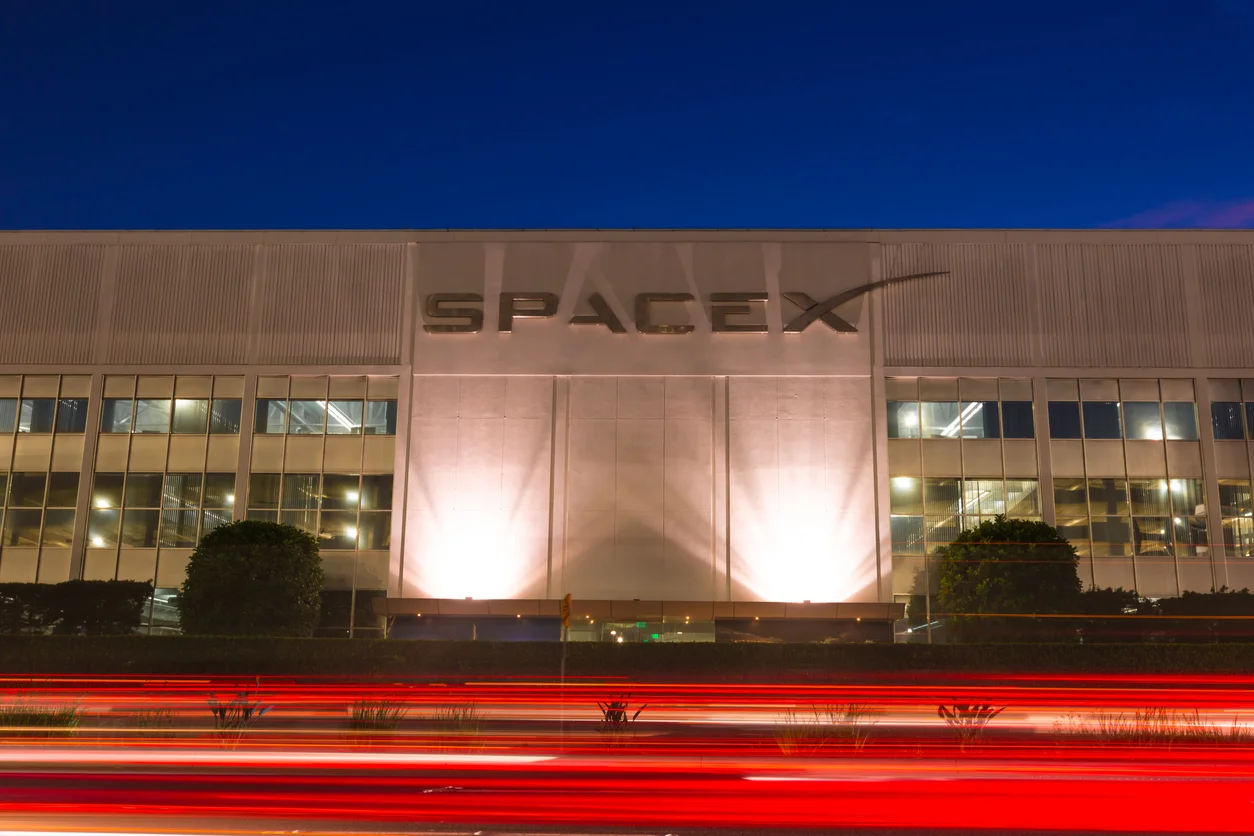
© open source

July 16, 2026 – Investors are turning their attention to SpaceX’s upcoming Starship launch as the mission is increasingly viewed as a key milestone for the company’s long-term growth strategy rather than just another rocket test.


While analysts remain divided on the stock’s near-term valuation following its volatile post IPO performance, many believe Starship’s progress could become one of the company’s most significant long-term value drivers.


Starship Represents More Than a Rocket

Unlike the Falcon launch system, Starship is designed to be a fully reusable heavy-lift vehicle capable of carrying significantly larger payloads while reducing launch costs over time.


The upcoming flight is expected to evaluate several critical capabilities, including satellite deployment and in-space engine relight, both of which are considered essential for expanding commercial launch services and future deep-space missions.


Analysts See Technology as the Long-Term Catalyst

Recent analyst commentary suggests that investor focus is shifting beyond short-term share price fluctuations toward the commercial potential of Starship.


The vehicle is expected to support future Star link expansion, larger commercial payloads, lunar missions, and next-generation space infrastructure, all of which could strengthen SpaceX’s long-term revenue opportunities if development milestones continue to be achieved.


Investors Balance Opportunity With Execution Risk

Despite the optimistic outlook surrounding Starship, SpaceX shares have experienced increased volatility since the company’s public debut as investors reassess valuation levels and await additional operational milestones.


Market participants are also watching the company’s upcoming earnings report and future launch schedule, viewing both as important indicators of whether SpaceX can translate its ambitious technology roadmap into sustainable financial growth.

Share this article

Read more

Related news

How Retail Investors Can Buy Shares in SpaceX’s IPO

How Retail Investors Can Buy Shares in SpaceX’s IPO

​June 7, 2026 — Retail investors may have a greater opportunity than usual to participate in SpaceX's upcoming initial public offering (IPO), as the company has allocated up to 30% of the offering to individual investors, significantly above the typical 5%–10% allocation seen in most IPOs. Access Depends on Brokerage EligibilityAccording to Reuters, retail investors seeking IPO shares must generally participate through brokerages that have secured allocations from the offering's underwriters. Eligibility requirements may vary by platform and can include account minimums and prior indications of interest. Demand for the offering has reportedly exceeded available shares, meaning not all investors who request shares are likely to receive full allocations. Buying After the IPO Remains an OptionInvestors who do not receive shares during the IPO process can still purchase the stock once it begins trading publicly under the ticker SPCX. However, market participants note that high-profile IPOs often experience significant price volatility during their first trading sessions. High Demand Highlights Investor InterestSpaceX's IPO has attracted substantial attention from both institutional and retail investors due to the company's position in the aerospace and satellite communications industries. Reuters reported that demand for the offering has already surpassed the number of shares available. The company is expected to begin public trading in June, making it one of the most closely watched market debuts of the year. Investors Weigh Risks and OpportunitiesWhile the IPO offers broader retail participation than is typical, analysts note that investors will continue to evaluate factors such as valuation, profitability, and future growth prospects after the shares begin trading. As with many large IPOs, market performance following the listing will depend on investor demand, company fundamentals, and broader market conditions.

UA Finance07 June
Why SpaceX Faces a Longer Wait to Join the S&P 500 Index

Why SpaceX Faces a Longer Wait to Join the S&P 500 Index

​June 5, 2026 — SpaceX's path to joining the S&P 500 has become longer after S&P Dow Jones Indices decided not to relax eligibility requirements for newly listed mega-cap companies, maintaining the current standards for inclusion in its benchmark indexes. The decision means SpaceX, which is expected to begin trading on June 12, will not receive special treatment despite its massive size and anticipated valuation. Earliest Possible Entry Is 2027Because the company is expected to debut on public markets in June 2026, it would not be eligible for consideration before June 2027 at the earliest due to the minimum trading-history requirement. Even then, the company would still need to meet the profitability and free-float criteria before it could be added to the index. Profitability Requirement Remains a ChallengeReuters reported that SpaceX recorded a net loss of $4.94 billion in 2025, despite revenue rising 33% to $18.67 billion. The company therefore does not currently meet the S&P 500's profitability requirement. S&P rules require a company to report a profit in its most recent quarter and across the previous four quarters combined. Limited Free Float Also Restricts EligibilityAnother hurdle is the company's relatively small public share float. Reuters calculations indicate SpaceX's free float is currently estimated at roughly 3% to 4%, well below the 10% minimum threshold required for S&P 500 inclusion. Billions in Passive Fund Flows DelayedAnalysts had expected S&P 500 inclusion to generate substantial demand for SpaceX shares from passive investment funds. According to a J.P. Morgan estimate cited by Reuters, inclusion could have attracted approximately $10 billion in passive inflows under certain valuation assumptions. While S&P has maintained its existing framework, rival index providers such as Nasdaq and FTSE Russell have adopted more flexible approaches, potentially allowing SpaceX to join some of their indexes sooner.

UA Finance06 June
SpaceX Plans $75B IPO at $135 Per Share, Reuters Says

SpaceX Plans $75B IPO at $135 Per Share, Reuters Says

​June 3, 2026 — SpaceX plans to set its initial public offering (IPO) price at $135 per share, aiming to raise about $75 billion, according to a source familiar with the matter, as reported by Reuters.The company intends to sell approximately 555.6 million shares in what is expected to be one of the largest IPOs in market history.Valuation Target Near $1.75 TrillionThe IPO is expected to value SpaceX at around $1.75 trillion, placing it among the most valuable companies ever to enter public markets.The offering is structured as an all-primary share sale, meaning all proceeds will go directly to the company rather than existing shareholders.IPO Structure and TimingAccording to the report, SpaceX is preparing for a highly unusual IPO process by setting a fixed price ahead of traditional investor roadshows.The investor roadshow is expected to begin this week, with trading potentially starting around June 12 under the ticker “SPCX” on Nasdaq.Use of Proceeds and Business ContextFunds raised from the IPO are expected to support SpaceX’s expansion across its core businesses, including satellite communications and future technology development.The company continues to position its long-term strategy around large-scale space infrastructure and next-generation technologies.Market Context and Investor InterestThe listing comes amid a broader wave of major private companies preparing for public offerings, with significant attention from global investors due to the scale of the valuation and fundraising target.Market participants are closely watching demand for what could become a record-breaking IPO in terms of both size and valuation.

UA Finance03 June
SpaceX IPO Fever Faces Wall Street Reality Check 24H Ahead

SpaceX IPO Fever Faces Wall Street Reality Check 24H Ahead

​ SpaceX’s blockbuster IPO ambitions ignited debate on May 20, 2026, as investors questioned whether Elon Musk’s $1.75 trillion vision can truly defy financial gravity. SpaceX IPO Hype Meets a Harsh Reality SpaceX stunned Wall Street after seeking a valuation nearly 100 times its $18.5 billion annual revenue. Supporters praised Starlink’s expansion and future space infrastructure plans, while skeptics warned the numbers looked “out of this world.” Can Space Dreams Outrun Valuation Fears? Analysts compared the SpaceX valuation with Apple and Nvidia, highlighting concerns over profitability and execution risks. Still, the upcoming IPO could become history’s largest public offering, proving that, sometimes, “the sky is no longer the limit.” The SpaceX story has also intensified scrutiny around Musk’s growing AI and satellite empire. Investors now face a defining question: are they backing a revolutionary commercial space network or simply chasing another moonshot fueled by extraordinary expectations?

UA Finance20 May
SpaceX Approves 5-for-1 Stock Split Ahead of IPO

SpaceX Approves 5-for-1 Stock Split Ahead of IPO

Saturday, May 16, 2026 Report: SpaceX Shareholders Approve 5-for-1 Stock Split Reports citing Bloomberg via Investing.com indicate that a majority of SpaceX shareholders have approved a 5-for-1 stock split, in what appears to be an internal restructuring move amid growing speculation about a possible future initial public offering (IPO). According to the report, shareholders were informed via email that the implied fair market value per share had been adjusted to approximately $105.32 after the split, down from about $526.59 before the adjustment. Strong Operational Activity Continues The report comes during a period of significant operational activity for SpaceX. The company recently successfully launched its Dragon cargo spacecraft on the CRS-34 resupply mission for NASA from Cape Canaveral Space Force Station in Florida. The spacecraft delivered approximately 6,500 pounds of scientific experiments and supplies to the International Space Station (ISS), following two weather-related launch delays earlier in the week. Preparation for Starship V3 Test Flight At the same time, SpaceX is preparing for the upcoming test flight of its next-generation rocket, Starship Version 3 (V3), currently scheduled for Flight 12 no earlier than May 19, 2026. The mission will mark the first launch of the upgraded V3 design, which includes: A height increase of approximately 5 feetUpgraded Raptor 3 enginesThrust exceeding 18 million poundsStructural improvements aimed at reducing weight and enabling rapid reusability

UA Finance16 May
Eutelsat Sees US Demand Steady Despite SpaceX Push

Eutelsat Sees US Demand Steady Despite SpaceX Push

​ On Monday, April 27, 2026, demand for satellite services remains firm in the United States, even as SpaceX seeks tighter rules on foreign operators, keeping Eutelsat in focus. A Transatlantic Tug-of-War in Space Can competition thrive when regulation tightens? Eutelsat CEO Jean-Francois Fallacher signaled resilience, stating U.S. demand—spanning businesses and the Pentagon—remains intact despite mounting pressure from SpaceX. The push comes after Elon Musk’s company urges the Federal Communications Commission to curb access for foreign satellite operators. The move reflects intensifying rivalry as governments shape market access in orbit. Regulatory Pressure Meets Market Reality In its April 16 letter, SpaceX highlighted SES as benefiting from U.S. openness while warning of European policies that could hinder American firms. Still, Fallacher acknowledged shifting dynamics, noting lobbying efforts are unsurprising in a more complex global environment. Yet demand signals suggest customers prioritize capability over politics—for now.

UA Finance27 April
SpaceX IPO Set to Shake Markets with $1T Valuation

SpaceX IPO Set to Shake Markets with $1T Valuation

​ On April 26, 2026, the SpaceX IPO is drawing intense attention as the company moves closer to a potential June listing, with a valuation that could exceed $1 trillion. SpaceX IPO: A Game-Changer in the Making? The upcoming SpaceX IPO could rank among the largest in history, with estimates pointing to a $1 trillion to $1.75 trillion valuation. Reports indicate the company may raise between $50 billion and $75 billion, highlighting the scale of investor demand. Unusually, the SpaceX IPO may allocate up to 30% of shares to retail investors—far above the typical 5% to 10%. This shift could broaden access and reshape IPO norms. Strategic Capital Moves Investors are also watching how funds from the SpaceX IPO might circulate across Elon Musk’s ventures, including Tesla and xAI, reflecting a pattern of shared resources.

UA Finance26 April
SpaceX Flags Risks in AI Space Data Center Plans

SpaceX Flags Risks in AI Space Data Center Plans

​ April 22, 2026—SpaceX has cautioned that its ambitious push into AI space data centers may face uncertain commercial viability, according to a newly revealed filing, as it prepares for a historic IPO. SpaceX’s Bold Vision Meets Reality Check In a revealing regulatory filing, Elon Musk’s SpaceX acknowledged that its plans to deploy an AI space data center rely on technologies still unproven at scale. The disclosure comes as the company eyes a valuation near $1.75 trillion and seeks to raise $75 billion, potentially marking the largest initial public offering ever recorded. While Musk recently described space-based AI infrastructure as a “no-brainer,” the filing presents a more measured tone, highlighting execution risks tied to innovation and deployment timelines. Could the future of computing truly orbit Earth, or is the vision ahead of its time? Starship Dependency Adds Pressure The company also underscored its resilience on Starship, its next-generation rocket, which has faced delays and testing setbacks. These hurdles amplify uncertainty around scaling AI space data centers efficiently.

UA Finance22 April
Musk Unveils Terafab to Power Chip Autonomy Across Sectors

Musk Unveils Terafab to Power Chip Autonomy Across Sectors

On Sunday, March 22, 2026, Elon Musk announced the development of a new chip project in Austin, intended to produce high-end chips for Tesla, SpaceX, and AI, to enable the companies to be less dependent on external suppliers and to boost the development of future robotics, cars, and space technologies. Terafab: Musk’s Bold Move toward a Self-Made AI Chip Future Elon Musk’s introduction of Terafab marks a major milestone in the world of high-tech manufacturing. Located in Austin, Texas, this mega chip fab facility is intended to develop advanced logic, memory, and AI chips in-house for Tesla’s self-driving vehicles and humanoid robots, SpaceX’s computing requirements, xAI’s initiatives, and so on. By vertically integrating the semiconductor business, Musk seeks to avoid supply chain constraints and the international challenges posed by external suppliers. Terafab may revolutionize chip independence for Musk’s businesses and potentially transform the competitive sphere of the AI, automotive, and space hardware industries. Why This Matters? Terafab marks the shift from outsourcing to in-house silicon, offering faster innovation, supply security, cost savings, and tech leadership in key sectors that could transform the semiconductor landscape. Here are the most important points: · Vertical Integration Redefines Manufacturing: With the ability to control the entire chip-making process from design to manufacturing, Musk’s companies will be able to innovate much faster, bypassing the supply chain problems that have hindered the development of AI and EV technology. · Boosting US Tech Sovereignty: Terafab's construction in the US will significantly bolster the domestic semiconductor industry. By bypassing foreign supply chains, this initiative will ensure that technology leadership aligns with the nation’s strategic interests. · Powering Future AI and Robotics: Custom chips will power Tesla's robots and AI systems, such as Optimus, and SpaceX's and xAI's future AI-related workloads. · Competitive Edge Against Industry Giants: Compared with TSMC and Samsung, Terafab has the potential to put Musk's companies at the vanguard of the latest silicon production, even ahead of the world's largest silicon plants. · Cost Efficiency Over Time: In-house production could lead to lower costs over time, especially as demand for chips for AI accelerators and autonomous systems increases. · Broader Tech Ecosystem Ripple Effects: This could lead to faster growth in the tech ecosystem, especially in AI and robotics, altering the dynamics of the semiconductor supply chain.

UA Finance24 March
Global Markets Show Mixed Trends as Tech and AI Stocks Shape 2026 Outlook

Global Markets Show Mixed Trends as Tech and AI Stocks Shape 2026 Outlook

Are Global Markets Entering a New Phase of Growth and Volatility? Global financial markets are showing mixed signals as investors balance optimism around technology with ongoing economic uncertainty. According to Yahoo Finance, stock indexes have recently fluctuated, reflecting both strong momentum in tech sectors and caution across broader markets. Recent sessions saw major indexes such as the S&P 500 and Nasdaq experience swings, as investors reacted to changing economic data and shifting expectations. At the same time, technology stocks—especially those tied to artificial intelligence—continue to provide underlying support. Technology and AI Stocks Continue to Lead Market Trends One of the most noticeable trends shaping global markets is the continued strength of technology and AI-related companies. Firms like Nvidia and Meta remain central to market performance as demand for artificial intelligence solutions grows. Recent updates highlight ongoing innovation, including new AI chip developments and large-scale infrastructure investments. These advancements are reinforcing investor confidence and helping drive gains in key sectors. However, analysts also point out that markets are becoming increasingly concentrated around a few major tech players, which could increase volatility if sentiment shifts. Economic Data and Inflation Shape Investor Sentiment Beyond technology, macroeconomic factors continue to influence market direction. Inflation data, employment reports, and interest rate expectations all play a critical role in shaping investor decisions. Recent reports suggest inflation has shown signs of stabilizing, while labor market data remains mixed. These conditions are creating a cautious environment where investors are balancing growth opportunities with potential risks. As a result, markets are experiencing periods of both optimism and hesitation. What This Means for Global Market Trends in 2026 The current market environment reflects a transition phase, where innovation-driven growth meets economic uncertainty. While AI and technology continue to drive long-term optimism, short-term fluctuations are likely to remain. For investors, this highlights the importance of diversification and staying informed about both sector trends and macroeconomic developments. As 2026 progresses, global markets are expected to remain dynamic, shaped by the ongoing evolution of technology and the broader economic landscape.

UA Finance20 March

Track Global Markets in Real Time with UA Finance

Download the app now and access live financial data, expert analysis, and trusted economic news to follow stocks, forex, gold, and cryptocurrencies with ease.
Starship Test Puts SpaceX’s Long-Term Growth Story in Focus