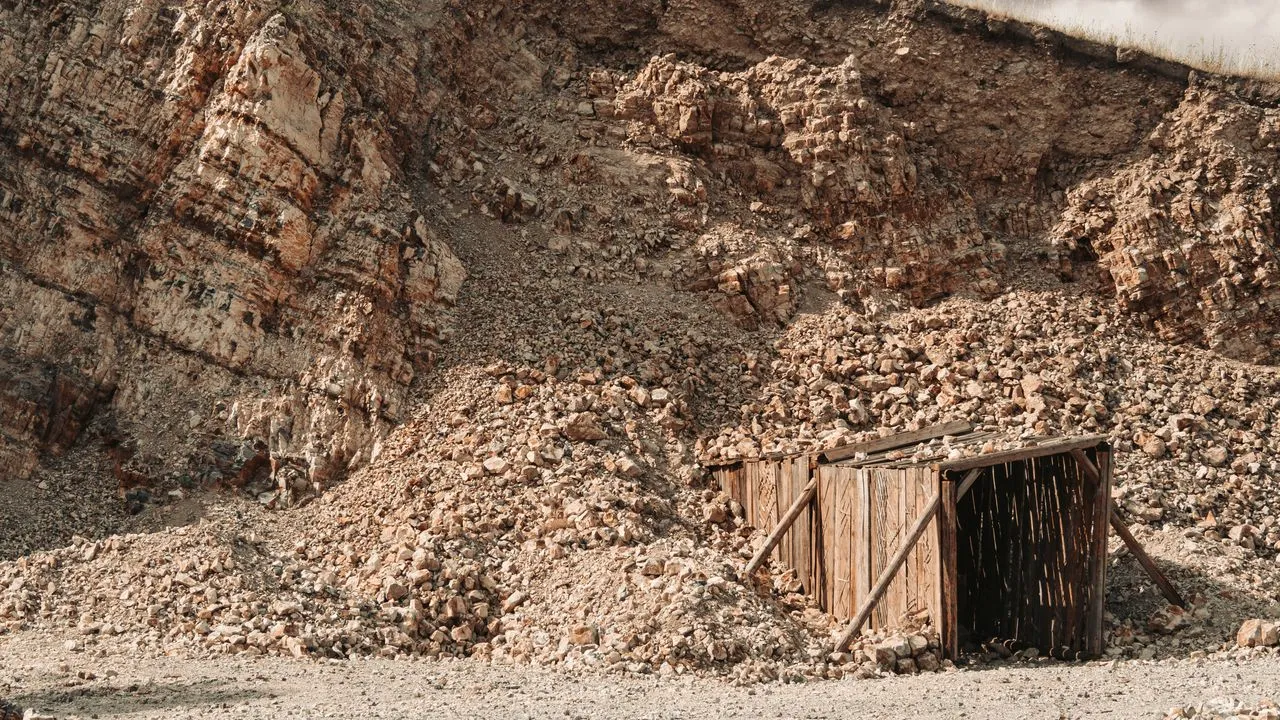
July 9, 2026 – Egypt's Abu Marawat Gold Project is progressing toward commercial production in 2027, supporting the country's strategy to expand its mining industry, attract new investment, and increase the contribution of mineral resources to the national economy.
The timeline was reaffirmed during a review of the project's Environmental and Social Impact Assessment (ESIA), held by the Abu Marawat Gold Mines Company in cooperation with the Ministry of Petroleum and Mineral Resources and other government entities.
Sustainable Mining Takes Center Stage
According to the Ministry of Petroleum and Mineral Resources, the Abu Marawat project is designed to follow international environmental standards while maximizing the economic value of Egypt's mineral resources.
The project's environmental plan includes water recycling systems, integrated waste management, environmentally friendly mining technologies, and community development programs aimed at supporting nearby areas.
Investment and Production Strategy
Located in Egypt's Eastern Desert within the Arabian-Nubian Shield, Abu Marawat is considered one of the country's most promising gold deposits.
The project is being developed through a partnership between the Mineral Resources and Mining Industries Authority (MRMIA) and Canada's Aton Resources, reflecting Egypt's continued efforts to attract foreign investment into the mining sector.
What It Means for Egypt
The Abu Marawat project forms part of Egypt's broader strategy to increase gold production, diversify sources of national income, and create new employment opportunities through mining.
Beyond boosting gold output, the project could strengthen Egypt's position as an emerging regional mining destination by encouraging additional exploration and investment in the country's untapped mineral resources.
Read more
Related news

Egypt Seeks to Double Chinese Investment as Export Hub Strategy Gains Momentum
July 9, 2026 – Egypt is aiming to double Chinese investments by the end of 2026 as the country continues to attract manufacturers looking to expand production and strengthen exports to regional and international markets.According to Mustafa Ibrahim, Vice Chairman of the Egyptian-Chinese Business Council, Chinese investments reached between $1.5 billion and $2 billion during the first half of the year, with plans to double that figure over the remaining months. Egypt is also in discussions with more than 50 Chinese companies, with agreements already signed with nearly one-third of them. Egypt Strengthens Its Position as a Manufacturing HubChinese companies are increasingly viewing Egypt as a strategic production base rather than solely a consumer market.The country's location, access to the Suez Canal Economic Zone, and investment incentives—including customs exemptions for exports and full foreign ownership in many sectors—continue to attract manufacturers seeking easier access to markets in Europe, Africa, and the Middle East. Investment Focus Expands Beyond New ProjectsMuch of the recent investment has been directed toward expanding existing factories, reflecting growing confidence among Chinese businesses already operating in Egypt.Chinese investments span several sectors, including manufacturing, chemicals, textiles, renewable energy, logistics, and consumer industries, supporting Egypt's broader strategy to increase industrial production and exports. What It Means for EgyptStronger Chinese investment could help Egypt create new jobs, increase industrial exports, and strengthen foreign direct investment inflows.The continued expansion of export-oriented industries may also improve Egypt's role in regional supply chains, although narrowing the trade gap with China remains an important long-term objective as bilateral trade continues to favor the Chinese side.

IMF Warns of Slower Global Growth as Middle East Risks Persist
July 9, 2026 – The International Monetary Fund (IMF) has lowered its global growth forecast for 2026, warning that geopolitical tensions, higher energy costs, and persistent inflation continue to weigh on the global economy despite signs of resilience in financial markets.According to the IMF's latest World Economic Outlook Update, global economic growth is expected to slow to 3.0% in 2026, down from 3.5% in 2025, before recovering to 3.4% in 2027. The Fund said the conflict in the Middle East has increased pressure on energy-importing economies through higher oil prices, while investment linked to artificial intelligence has helped offset part of the slowdown.Energy Prices Remain a Key RiskThe IMF noted that rising energy prices remain one of the biggest risks to the global outlook, particularly if tensions in the Middle East escalate further.Although the global economy has shown greater resilience than initially expected, renewed disruptions to energy markets could increase inflationary pressures and slow economic activity across many countries.What It Means for EgyptFor Egypt, a slower global economy could translate into higher import costs if oil prices remain elevated, while weaker global growth may affect trade, investment flows, and external demand.At the same time, continued support from international financial institutions, ongoing economic reforms, and stronger regional investment could help cushion part of the impact if global conditions remain challenging. These factors continue to play an important role in supporting Egypt's external financing and investor confidence.Markets Watch Geopolitical DevelopmentsThe IMF said future economic conditions will largely depend on developments in the Middle East, inflation trends, and central bank policies.Policymakers were urged to maintain price stability, preserve financial resilience, and continue structural reforms as uncertainty surrounding the global economy remains elevated.

Gold Prices Rise in Egypt as Global Market Tracks Geopolitical Risks
July 8, 2026 – Gold prices in Egypt recorded gains on Tuesday, supported by an increase in global bullion prices as investors monitored renewed geopolitical tensions in the Middle East and awaited further signals on U.S. monetary policy. According to Dahab Misr, 24-karat gold reached EGP 6,701.59 for buying and EGP 6,615.70 for selling. Meanwhile, 21-karat gold, the most widely traded in Egypt, was recorded at EGP 5,864.48 for buying and EGP 5,789.32 for selling. The international ounce traded at around $4,169.90 for buying and $4,169.40 for selling.Global Factors Support GoldGold prices received support from increased demand for safe-haven assets following renewed tensions in the Middle East after the latest developments between the United States and Iran. However, gains remained limited as investors also assessed expectations for U.S. interest rates, with markets awaiting the release of the Federal Reserve's meeting minutes for further guidance on monetary policy. Local Gold Prices Follow Global Market The Egyptian gold market continues to move largely in line with international bullion prices, as recent exchange rate stability has reduced the influence of the U.S. dollar on domestic gold pricing. As a result, movements in the global gold prices and investor sentiment as well, have become the primary drivers of local gold prices. Markets Await Further Direction Investors are now watching geopolitical developments alongside upcoming U.S. economic data and Federal Reserve policy signals, which are expected to remain key factors influencing gold prices in the near term.

IMF Says Stronger Regional Cooperation Could Support Egypt's Economic Outlook
July 9, 2026 ,A new International Monetary Fund (IMF) paper has highlighted the growing importance of regional economic cooperation, suggesting that stronger trade ties, payment systems, and investment partnerships could help economies such as Egypt navigate increasing global trade fragmentation. While the report focuses on cooperation between the Gulf Cooperation Council (GCC) and the Caucasus and Central Asia (CCA), several of its recommendations align with Egypt's efforts to strengthen regional trade and attract long-term investment. Regional Payment Systems Could Improve TradeThe IMF highlighted the Arab Monetary Fund's Buna platform as an example of how regional payment systems can make cross-border transactions faster and more efficient. With the Egyptian pound already integrated into the platform, businesses may benefit from lower transaction costs, faster settlements, and reduced reliance on traditional correspondent banking networks for regional payments. GCC Investment Priorities Are Shifting The report also noted that Gulf investment is increasingly expanding beyond traditional sectors such as oil and financial services. Instead, GCC investors are directing more capital toward renewable energy, logistics, transportation, digital infrastructure, and industrial development—areas that closely match Egypt's ongoing economic development strategy. Regional Integration Gains Importance According to the IMF, stronger regional partnerships are becoming increasingly important as global trade patterns continue to evolve. Expanding trade agreements, improving payment connectivity, and strengthening financial cooperation could help countries improve economic resilience while supporting investment and cross-border commerce. What It Means for EgyptAlthough the IMF paper does not focus specifically on Egypt, its findings reinforce several areas where the country is already making progress. Egypt's participation in regional payment initiatives, growing economic ties with Gulf countries, and continued efforts to attract investment into infrastructure and logistics position it to benefit from any regional cooperation if these initiatives are still continuing to expand.

Analysts Raise Gold Price Forecast 2026 Amid Global Uncertainty
Gold is on track for a record-breaking performance in 2026, according to a recent Reuters poll of analysts and traders. The survey of 30 experts revealed a median gold price forecast 2026 of $4,746.50 per troy ounce, up from $4,275 in October and marking the highest annual projection in Reuters polls since 2012.The surge in gold prices reflects mounting geopolitical tensions, strong central bank purchases, and ongoing concerns over the stability of global economic and financial systems. David Russell, CEO of precious metals dealer GoldCore, noted, "Institutions that have supported global stability for decades are being tested in ways not seen in a generation." Key Drivers Behind Gold’s RallyGold rebounded to near $5,100 recently, following its best day in over 17 years, recovering from the metal’s sharpest two-day decline since 1983. Analysts cite geopolitical risks, central bank buying, U.S. debt concerns, trade uncertainties, and de-dollarisation as key factors sustaining the rally. Deutsche Bank analysts emphasized that the rationale for gold allocations remains strong in 2026.Central Bank Buying and Market TrendsCentral banks are expected to continue expanding their gold reserves to diversify away from the U.S. dollar. Despite this, jewellery demand in key Asian markets may decline due to elevated prices, while investment-driven demand is likely to remain robust.Silver Outlook Also Revised UpwardsSilver forecasts have also been adjusted, with analysts predicting an average price of $79.50 per ounce in 2026, up from $50 in the October poll. Following a record 147% gain in 2025, silver reached $121.64 in January before retreating to $89.70. Analysts warn of continued volatility due to weakening industrial and jewellery demand, as well as easing supply tightness.
commodities and futures contracts latest news

Oil Holds Near Multi-Week Highs as Middle East Risks Keep Supply Concerns Alive

Gold Faces Weekly Loss as Inflation Concerns Offset Safe-Haven Demand

Cooling U.S. Inflation Eases Pressure on Fed, but Rate Outlook Remains Uncertain

Oil Holds Near Recent Highs as Markets Assess Prolonged Supply Risks