
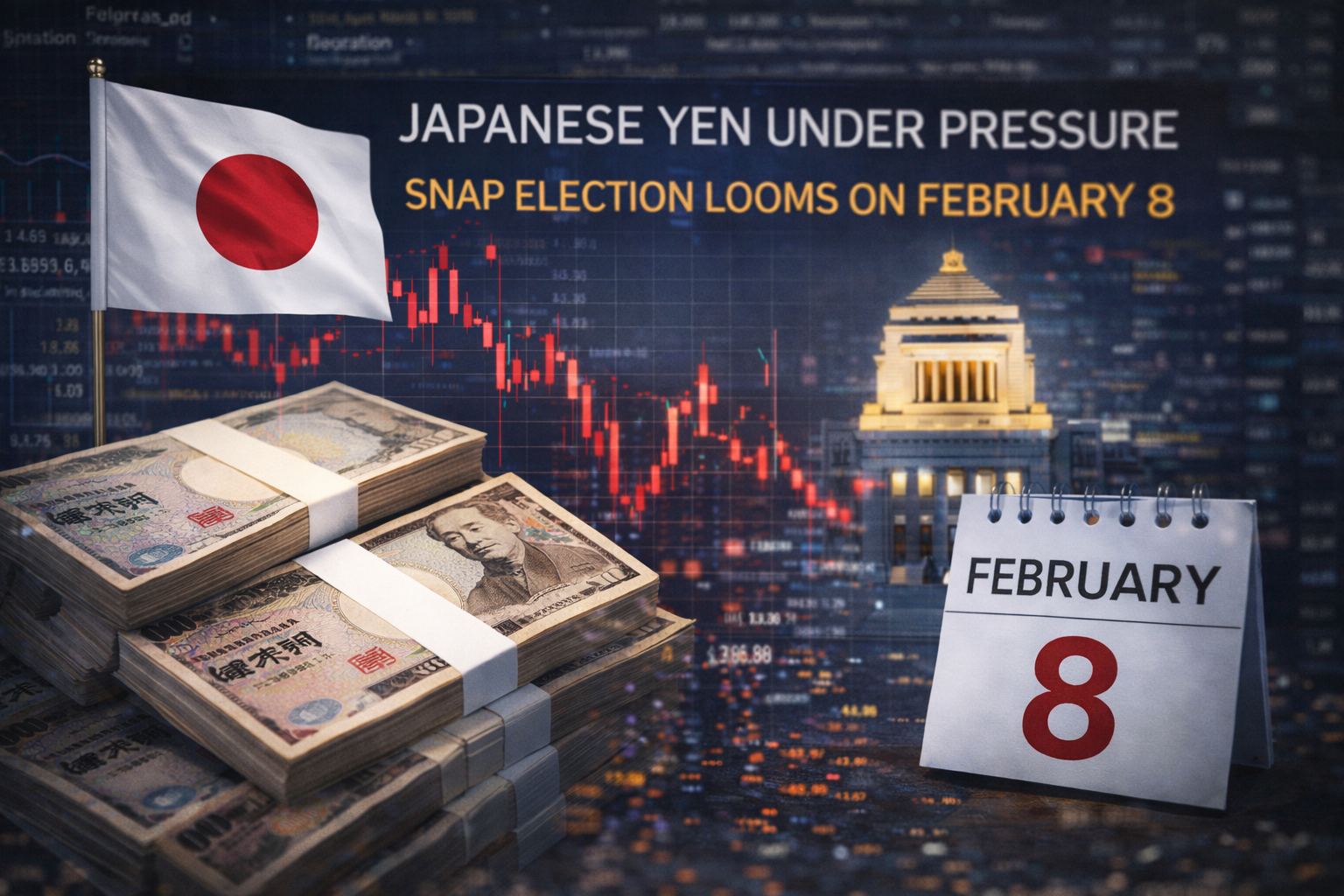
Asia FX Mid-Week Report Yen Under Pressure as Japan Gears Up for February 8 Snap Election


SINGAPORE — Asian currency markets remained largely range-bound on Wednesday, February 4, 2026. While the U.S. Dollar’s recent rebound showed signs of exhaustion, idiosyncratic risks in Japan and hawkish surprises in Australia dominated the regional FX landscape.
1. Japanese Yen (USD/JPY): The Election Risk
The Japanese Yen fell to a near two-week low, with the USD/JPY pair trading around 156.45.
The Trigger: Prime Minister Sanae Takaichi’s party is poised for a landslide victory in the snap election scheduled for this Sunday, February 8.
Investor Concern: Markets fear that a Takaichi mandate will lead to aggressive expansionary fiscal spending, potentially ballooning Japan’s debt. This has sparked a rout in Japanese Government Bonds (JGBs), further weakening the Yen.
2. Australian Dollar (AUD/USD): The Lone Hawk
In a stark divergence from other global central banks, the Reserve Bank of Australia (RBA) delivered a surprise 25 bps hike, bringing the cash rate to 3.85%.
Impact: The AUD/USD pair surged above 0.7030, hitting its highest weekly close in two years. With the Fed cutting and the RBA hiking, the widening yield differential is drawing massive capital inflows into the Aussie dollar.
3. Indian Rupee (USD/INR): "The Father of All Deals"
The Indian Rupee remains the standout performer this week, stabilizing near 90.30 after a historic trade deal between the U.S. and India.
The Deal: Tariffs were slashed from 50% to 18%, with India agreeing to increase purchases of U.S. energy and defense tech.
Outlook: Analysts at MUFG have revised their USD/INR targets lower to 89.50 for Q1 2026, citing improved trade dynamics.